Fexmouth

  • A person's hand holding a wooden wand inside a car, with a shopping bag labeled 'Albus & Sons Fine Wands' visible in the background.

    Follow the story: Check out the new Fexmouth Wiki

    I had been dating a doctor for a while. A Moroccan doctor who came here a year or two ago, not because he found Manila particularly interesting or attractive, nor its people or customs, but because he wanted to go somewhere, anywhere but where he was, and he found that Manila was the most accessible. There was a program in his medical school that allowed for graduates to work in Manila for the experience, with opportunities for graduates to become naturalized citizens. Which was not especially hard, given that there was not really much competition when it came to becoming a Filipino citizen.

    We met at a gallery opening. I had been dragged into it by Juno, whose friend at the law firm she worked for was also an artist. I had always wondered how this friend Annie had time to be a legal assistant as well as an artist, but my curiosity was satisfied when I got there. The gallery was called Silver Linings (a dreadful name for a gallery that is supposed to be a cultural paragon of taste, but there you are), and her art hung in the main gallery through which people entered. Various passages led to other, smaller exhibitions.

    Annie’s exhibition was called Fell, and was supposed to be a “celebration” of the most brutal, most terrible yet most essential parts of life, through mixed-media art. Most of them incorporated very textured oil painting with sculpture that used unconventional material, like refuse or combs glued together or rolls of toilet paper dissolved in glue and then molded.

    There was much effort, certainly, put into the works, although I had very profound doubts regarding their merit. Very profound, cosmic doubts. First of all, although she attempts to draw in a style that is supposedly “bad on purpose,” one cannot help but feel as though the “bad” part is too adept or natural. It is almost as if an actor who played a bad actor played that bad actor badly. It is an aesthetic experience, surely, that one had to experience firsthand—I suppose like any enduring work of art.

    And of course Annie, being a charming woman, already had collectors: rich, old, lonely men who hoarded her work, driving up the prices as well as hopefully bringing her work to wider attention. By the time that we had gotten there, only a few hours after opening, all but a handful of the works had already been sold.

    I was looking at one, named “To Ray, Whom I Loved, But Did Not Love Me Back.” It was a painting, but its canvas had been bent, so that a part of it served as the floor, onto which was perched a sculpture of a doll shaped like a girl, falling through space, held up by a thin, black wire. The painting on the canvas that served as the floor was painted in harsh, terrifying reds and browns, like a vortex that was a portal to hell, and as one traveled up the canvas, it transitioned slowly—never abruptly—into light blues, whites, and greens.

    On the face of it, the idea was interesting, although it was not especially so, and the execution was worse. There was no real form or idea to what served as “heaven” and “hell,” apart from the muddled colors that were supposed to suggest the concepts. And the very opposition of these concepts is so immature, trite, and repetitive that I felt no work under such a simple and childish theme could surpass being merely interesting.

    In the end, all of her work merely bored me.

    I walked around, not saying much of anything, as I was wont to do when I did not find anything noteworthy, and then sat down. Juno walked with me, and then sat with me, and then Annie passed by and recognized her.

    Juno introduced me. Annie had artificial red hair and was wearing contacts that turned her eyes a shade of green and gray. She was thin and beautiful and her pale skin and prominent features gave her the aura of an elven, otherworldly woman. It was apparent that she would be the type to have superior intelligence as well as an artistic streak. She was very nice and had a glowing smile.

    “Juno’s told me a lot about you,” Annie said.

    That surprised me, but I didn’t know why. Juno is one of my closest friends. We spent a lot of time together.

    “Thank you,” I said. “Although I don’t know what she would be saying about me. I’m nobody.”

    “She says you’re a writer.”

    “I suppose in a very general sense.”

    She smiled wider and nodded and did not say any more.

    And it was here that someone walked up to her and wrapped an arm around her and kissed her and handed her a cup of the spiked punch from the buffet table. I looked at who it was, and it was the most handsome man I had ever seen. The most handsome man, even then, that I knew I was ever going to see.

    “Babe,” Annie told this man. “This is Juno. She works with me at the law firm. And this is her friend, Arya. She’s a writer.” She turned back to us. “This is Youssef.”

    He shook hands with Juno, and then he shook mine. And I was overcome then with a sense of destiny. An overwhelming sense of destiny.


    After that, I kept thinking about this person, if only because they were handsome. Naturally, I told my clone about it, and the first thing we did was try to find his social media. We found nothing. Then, we tried to find out if we could somehow scour public records of medical practitioners in Manila. Surely, they have those? Doctors are licensed, and we need to have some type of way to check whether a doctor we’re seeing is legitimate. If any such list exists, then we did not find it.

    At some point, we realized that Raziel has all sorts of ancient and mystical knowledge. We reasoned that, perhaps, in his angelic form, he had knowledge of all things. These days, Raziel spent his time working. He volunteered at several organizations and charities and was building up a kind of portfolio. He had an Instagram channel where he posted both informative and thirst content where he showed off, although surreptitiously and under the guise of coincidence, his almost mythical physique.

    I followed him, of course, and even helped him with technology, which he did not know how to use. He was a fast learner and pretty soon was doing everything himself. One time, when he invited me for dinner, and we were eating at the Hong Kong cuisine restaurant behind our house, I said: “You are teetering on the line between virtue and sin, no? In that you use your beauty to tempt. Even if it is for ultimately good ends.”

    He was eating congee, as he was still not very accustomed to eating. He liked things like soup and other soft food, so that he could simply slide them down his throat.

    “I tempt nobody, Augustus,” he said. “If they appreciate my beauty, then let them. God is the source of all things beautiful.”

    “And if they long for you sexually?”

    “That is natural. Very natural.”

    I could have contradicted him, but I shrugged and continued to eat. I enjoyed going through his material. It would have been against my interests to convince him to stop, not that I would have succeeded. Despite his terse and easy responses, Raziel was an ancient creature created during the dawn of time. The wise thing to do would be to trust him. Although angels were also susceptible to catastrophic folly, as evidenced by Raziel’s fallen brother…

    I moved the conversation along to Youssef. Raziel said that he did not know. He also said that he could not be expected to know every person on Earth; that was not within the domain of angels. They were not omniscient like God.

    I sighed.

    “Why don’t you ask Juno’s friend about him?” Raziel said. “Are they together? You shouldn’t butt into their relationship if they are together.”

    “I don’t know if they’re together.”

    “But you’re not saying they’re not together.”

    “He gave her a glass of punch. He had his arm around her. I think maybe they were dating. She didn’t introduce him as her boyfriend, which she would, if they were together.”

    Raziel considered this. “I suppose.”

    We ate in silence for a while. I went through my phone. Raziel went through his as well. He took a selfie of himself with his food. The moment he posted it, I got a notification on my phone, which made me laugh. Although he already knew that I followed his material closely. He found my affection for him funny, probably because it was so predictable.

    Then, Raziel broke the silence. “How’s David? Weren’t you with David?”

    I swallowed and drank water. “We are no longer in touch.”

    “I’m sorry, Augustus,” he said. “But that is just so typical.”

    “He broke up with me. And then he vanished. When he came back, he had another girlfriend.”

    “He was here only a few weeks ago. Something else must have happened.”

    “We might have had a little argument.”

    “He was very good to you.” He poured himself another glass of water from the pitcher and shook his head. “He was very, very good to you. He wasn’t perfect, as no man is perfect, but whenever it was within his power, he tried to be good to you.”

    I shrugged. “What we had was not so important that I could overlook how annoying he was being right around that time.”

    “What did he do that annoyed you so much, then?”

    “I don’t want to talk about it.”

    Raziel was not used to being visible to ordinary humans, and he had not yet mastered the art of hiding his feelings, so they showed on his face. He raised a single eyebrow and then rolled his gray eyes as he returned to his meal.


    My clone was going through God of War. He was playing on the television in his room, and I was sitting on his bed watching his playthrough. I enjoyed having someone who shared my interests. Although it bothered me how many opinions we did not share. If we were essentially the same person, then shouldn’t we both have the same perspective? But we decided that there were minute, infinitesimal factors at play we could not even start to consider. Especially not while he had to go through the list of games he had to experience for himself.

    He was having difficulty with the soul eater, an enemy made of stone. He needed to deflect its projectiles, pick them up, wait for an opening when the hole on its torso was exposed, and then throw the projectile back in. He was having trouble being fast enough. I was the same way when I first played it.

    He was grumbling when he died again. “Annoying… The timing is too quick. There’s no time to maneuver.”

    “You could use your axe,” I said. “It’s slower, though.”

    “I don’t want to…”

    He eventually beat it after a few more tries. He huffed. “Fucking finally…” And then he went back to a more leisurely pace exploring the area where the dark elves lived.

    While playing, he said, “Did you ever find out about that hot guy?”

    “No,” I said. “I don’t know if I’ll ever see him again.”

    “There’ll be others. There always are.”

    “I guess.”

    “Do you remember Claud?” He was looking at the widescreen television, navigating. “When you were in high school? And then Rex in college? And a long while after college, actually…”

    “I loved Rex.”

    “And when things got so bad he decided he wanted nothing to do with you anymore, didn’t you think you’d never love again or some stupid shit like that?”

    “This is different.”

    “Only difference is it’s more recent.”

    The king of the dark elves appeared in the game, and my clone had to deal with him. Like me, he had built his Kratos as a tank. He took a lot of damage because we do not have very fast reflexes, but he was adept enough and was surviving the encounter, many times even parrying accurately.

    I watched him for another hour or two. Right about this time, Juno sent me something, some meme that she wanted me to see. It was a joke about exercising and about how we always spoke about doing it but never did. I watched it, reacted, and then said: How is that friend of yours, Annie? I enjoyed her art. I saw more of it on her webpage.

    She said that Annie was okay, that she had met her only a while ago because she had come from the office. Usually, Juno works from home. I realized that I absolutely had no more leads, and so I asked: Do you know whether that man she was with was her boyfriend?

    Juno said that the man was a doctor whom Annie dated for a while, but they were no longer together. Annie had spoken much about it, Juno said. Annie was distraught about having lost him, given that he was such a good prospect. But things were “not meant to be.”

    I said that I had a crush on him and wanted to see him again. Juno said that she was going to try to find out more about him, but she didn’t know if Annie would want to talk more about that guy. So I said: If you don’t want to ask her, I will. Why don’t you invite Annie to have dinner with us?

    Juno had known me long enough to know that I was not being absurd. In my life I had done many things for men that others might consider excessive. My clone had complete access to my past, being essentially myself, and knew that my life has been characterized and punctuated by desperate acts in the name of manly affection. Juno knew this, too, since we had known each other for a little over 20 years at this point.

    So, she said yes.


    Annie, Juno, and I met that weekend at Café Breton, which was beside Café Havana, in the open-air area of Greenbelt 5. This place was the legendary haunt of many whores and expats who sought to do business together. My friends and I enjoyed watching the drama that unfolded, as business of this nature was conducted. The food in Café Breton was good, too.

    Annie was a very intelligent person. She was a lawyer, like Juno, and then studied fashion and art overseas in some New York institute. Despite this, there was no pride about her at all. Under different circumstances I would have liked to be her friend, especially since she did much to advance her career on both fronts: the legal and the artistic. Whatever the limitations of her creativity, I knew that such grit was infinitely more valuable. She was good, although not great, and with such perseverance she was bound for success, as with the same perseverance even the mediocre succeeded. And without the same perseverance, even the brilliant failed.

    We were already having our dessert by the time I brought up the man I saw at the gallery. We were talking about love and about the future and about getting married, and casually I said: “You have a boyfriend, right? That man you introduced us to? What was his name?”

    “Youssef,” Annie said. “I really liked him. But…” She was twirling her hair. “It just wasn’t meant to be.”

    It was here that I learned he was a doctor at Makati Med. That he was from Morocco, and that he was voracious for success. He was pathologically ambitious. And Annie could not keep up with the constant tug of war she had to engage in against Youssef’s ambitions. She wanted to travel, to meet people, to go to the beach, to take a cruise, but Youssef was unwilling to ever miss an opportunity to advance his position at the hospital.

    I could tell that she was really broken up about having lost him. Which led me to believe that it was the man, rather than her, that broke it up. And whatever excuses she might have for being better off without him were white lies she told herself to ease her pain. I was familiar with these tactics of self-consolation; she was as adept at them as I.

    Because of this I could not bring myself to ask her directly about him. I knew, somehow, that she would be suspicious, and would think it low of me to have invited her, and to have consoled her, when in fact I sought to have Youssef for myself. I suppose in some way it could be seen as a sort of treachery.

    Still, she said: “It’s a pity. I was going to come with him to the Harry Potter Yule Ball. He was my date.”

    She was talking about the event that was going to be held at Muso World Manila. Some stupid, overpriced event where people pretended they were in the movie.

    “He’s going to be there?” I instinctively looked at Juno, who was also looking at me.

    “I don’t know if he’s still going if I’m not going,” she said. “But we were going with a few other friends, and he did pay for a ticket. And he would never spend money on something he wouldn’t use… That was one of the things about him. At the time, I hated it. But looking back… It was charming, really. It was very charming.”

    “You’re not going?” I asked.

    “I already gave my ticket away. I couldn’t bear to see him again. Especially not there.”


    My clone and I bought tickets to the Yule Ball, and when Raziel learned about what we were doing, he bought tickets, too. Emily was a fan of Harry Potter and came with us. She was going to go as a Gryffindor. My clone and I wondered together if we should both go as Ravenclaw or Slytherin, or perhaps one should go as Ravenclaw and the other as Slytherin. Finally, we decided that he would go as Ravenclaw, whereas I would be Slytherin.

    Raziel had not read the books. He read the first one and was so enamored with it, despite his misgivings regarding the writing (“What a downgrade from Tolkien… Not even at the level of Le Guin…” he said), that he read all of the books and watched all the movies within the span of around three weeks. He basically did nothing else but think about the franchise around that time, and we had many interesting discussions regarding the characters, objects, concepts, and events there.

    At one point, while reading the sixth book, The Half-Blood Prince, Raziel was interested in how Dumbledore sacrificed himself and tasked Snape with killing him. It reminded him, of course, of The Lord. But he was very critical of the comparisons because Dumbledore sacrificed himself when he was about to die in any case, and about to die as a result of a selfish and abominable act: Attempting to bring his sister back to life. Necromancy, Raziel called it, with disdain as if such a thing were even possible. Perhaps he had lived through times when it was.

    Emily was at the house, then, and we had just finished watching a movie. We decided to order food, and we were eating it in my room.

    Raziel was sitting Indian on the bed with chopsticks and a cup of noodles. He was saying: “I find nothing especially noble in Dumbledore. He is benevolent and supposedly the most powerful wizard who ever lived. He is supposed to be very wise. But he doesn’t seem very wise to me.”

    “I don’t think he was very wise, either,” I said. “I mean, even putting the alleged necromancy aside, I don’t think he put enough of an eye on Harry, given Harry’s destiny. And many things that went awry were directly the result of his not minding this young and stupid boy. I mean, throughout most of the series Harry is barely 18.”

    Emily said, “I think Dumbledore didn’t want certain information to be out there, so he was very secretive. I think maybe he was watching from the sidelines.”

    “Even in the first book,” I said, “he let Harry, Ron, and Hermione go into the hidden place where the mirror of Erised was. How well hidden was that thing, that three kids were able to get to it? And even if you put aside the fact that these children almost died, how were these first years able to get to the philosopher’s stone? And of course by that time even Voldemort himself had gotten to it first.”

    Raziel was shaking his head while scooping up noodles into his mouth. When he had swallowed, he muttered, “Incompetence…”

    Still, Raziel found it enjoyable and fascinating. We asked him about his House, and he said Gryffindor (“Of course,” he grumbled). I said that he was more of a Hufflepuff to me.

    “Excuse me?” Raziel said. He was prone to being deeply offended. He never acted irrationally or became cruel as a result, but his lofty dignity as one of the angels meant that he was aware always of his stature among God’s creatures. Especially among us mortals. “Nothing against the Hufflepuffs, including noble and short-lived Cedric Diggory, but I am more than a mere jolly and loyal friend. I am fierce like a lion. Perhaps sometimes foolhardy. As when I was beckoned into that cursed box created by your hell-bound friend Elmer.”

    “That’s Slytherin talk,” Emily said.

    Raziel’s brows furrowed at this. “I don’t think I even need to entertain that idea.”

    “I hope not,” I said. “I don’t want you to be in the same house as me at the ball. You’d steal the spotlight.”

    Raz finished his meal and threw his cup noodles in the trash. He sat on the couch in front of me, situated at the front of my bed, and looked through his phone. “Reminds me. I should check whether the custom robes I ordered are ready. Are your costumes ready?”

    “Need to get my nails done,” I said. “Fix my wig. Get a wand. I don’t want one of those cheap wands…”

    “I’ll send you the place where I had mine made,” Raz said. “Real wood. Custom. Bespoke.”

    Anyone who has ever read Harry Potter, or even had a casual interest in it, was curious about their house. The matter is trivial, of course, because the Sorting Hat makes it clear to Harry that if the student being sorted wanted to be in a certain house, then the Sorting Hat would grant that request. But one does wonder, like Harry, about one’s inner essence, one’s tendencies and one’s predispositions. One’s objective self. Which is why online quizzes, no matter how stupid, have always been popular, along with horoscopes and personality tests (which have always been bunk but touted as science).

    I’ve always been sorted into Ravenclaw. When the website came along, everyone tried to sort themselves using the quiz there, and every time I was sorted into Ravenclaw, even if the questions seemed like non sequiturs. Later, I asked Elmer’s AI Quibble (which was several hundred orders of magnitude more powerful than ChatGPT or Claude) to sort me based on everything it knew about me, after using it for a time and inputting other psychometric data I’ve gotten from Dr. Tal, and still it sorted me into Ravenclaw.

    But many times Quibble also told me that Slytherin is a close second. The life of the mind was central to me, and that pushed it towards Ravenclaw, but I also had powerful tendencies that were characterized by ambition, purity, and self-interest.

    Elmer, interestingly enough, was a Gryffindor. I wasn’t entirely convinced he hadn’t manipulated Quibble to say that.


    I had to go to Elmer’s to talk to Quibble, because I wanted to determine my wand. I could have just made it up, but I wanted some kind of basis, some kind of authority. At least, something outside myself that had knowledge of these things, just as the witches and wizards of London went to Mr. Ollivander when they wanted to buy a wand.

    In Harry Potter, people were always looking for some kind of authority that would tell them who they are. Their first experiences at Hogwarts are about being told what kind of person they are, with their wands and their Houses. It disappointed me that Harry came to completely accept and become this throughout the series, rather than raging harder against it. Does this teach kids that they have some kind of unalterable destinies? That Harry was one thing at the moment his parents were murdered, and he could not help but fulfill this destiny to the very end? There are story reasons for these, but one must think of what message this sends to the children. Won’t anybody please think of the children?

    Mrs. Gatdula said hi and didn’t pull me aside. I had brought Raz with me, and she exchanged a few words with him after me, telling him that she followed his social media. She squeezed his arm and said that he was doing good work at the gym. Elmer was already downstairs, so we went up to his room. Quibble only worked locally. Files from the Internet were “funneled” into it, as Elmer did not want it to be scouring the Internet, doing things of its own volition.

    Elmer had a work station that was in his room, rather than the lab, and he had seven monitors, like one of those massive stations at the New York Stock Exchange. He let me sit down on his computer chair (which alone cost around Php 350,000), and I switched over to Quibble, which was already open. I think Elmer had been working on it.

    “Hi Quibble,” I said aloud. It worked so well that talking to it like a person was the best way to communicate with it. Typing was as inefficient and ridiculous as texting someone who was already in front of you. “Just wanted to check up on my Hogwarts sorting and wand. We have a Yule Ball next weekend.”

    “Hello Augustus,” Quibble said, in its positive but not necessarily gleeful way. It did not have a face or avatar in its user interface, but I’ve told Elmer many times to include some type of face, maybe generate one. It was certainly powerful enough to do it on its own. But Elmer said that it was unnecessary and possibly dangerous; we might begin to think of it as a living thing, which it was not.

    “Where do you want to start?” Quibble said.

    “I’m going as a Slytherin,” I said. “My clone is going to be going as Ravenclaw. I’m thinking that maybe because I’m going as Slytherin, we could emphasize in my next questions that side of me.”

    “Perfect,” Quibble said. “I’ll focus on your Slytherin-related aspects.”

    “Good. Tell me about my wand.”

    It thought for a while. I could see on the user interface that it was gathering the data I had fed it before as well as going through our previous interactions. It took around six minutes before a file opened with its conclusions.

    Wood — Hornbeam
    Hornbeam becomes closely attuned to its owner’s magical style and personal principles. It suits your insistence that a work fulfill its intended purpose, alongside your strongly individual sensibility. This would become a highly personalized wand, difficult for someone else to use effectively.

    Core — Dragon heartstring
    This supplies power, rapid learning, and the capacity for dramatic magic, with some temperament accompanying those strengths. It fits the creative energy of the combined portrait, particularly the intensity with which you can become absorbed in something you want.

    Length — 12¾ inches
    My chosen proportion allows for expansive, expressive gestures while retaining the balance of a slender instrument. Its shaft would taper gradually to a fine point.

    Flexibility — Slightly springy
    Responsive under deliberate pressure, with a definite return to its own shape. This represents firmness of purpose alongside an ability to explore, adapt, and become unexpectedly enthusiastic.

    Appearance — Smoke-stained hornbeam with antique silver
    Deep brown, with the grain visible. Shallow branching grooves run around the handle, settling beneath the fingers. A single narrow antique-silver band marks the transition from handle to shaft.

    Magical character — Precise, expressive, occasionally exuberant
    It excels at intricate charms and transformations: giving an imagined thing a convincing, detailed presence. Its characteristic excess would be producing an enchantment more elaborate than originally intended because its wielder became fascinated with the possibilities.

    “An exacting instrument,” Quibble said. “It would learn your intentions exceptionally well. Although you’d still have to decide what those intentions are.”

    Elmer was lying on his bed going lazily through his phone. “Nefarious ones, undoubtedly.”

    I took a picture of the file with my phone. I turned the chair towards Elmer. “You’re not coming with us?”

    “I don’t know anything about Harry Potter.” Elmer looked up from his phone, which he placed face-down on his stomach.

    “You don’t need to,” I said. “It’s a ball. We’ll just dance and eat and drink and have a good time.”

    “And why would I go to that overproduced shite, as opposed to some party or night club where I could go for free?”

    “First of all,” I said, “we’re going to be pretending to be witches and wizards. That is going to be fun. Also, you don’t need to care about money. That’s one of the best things about being Elmer Gatdula.”

    “And the massive cock?” Elmer said.

    Raziel side-eyed him. He was sitting at the foot of Elmer’s bed. “Crude, faithless swine.”

    Elmer laughed at this. “I’m just joking!”

    “Disgusting joke,” Raziel said.

    “Oh?” Elmer sat up. “And speaking of wands, how big is your cock, Raz? I mean, I’ve seen it flaccid, but I’m talking erect. At full power. Super Saiyan. Archangel style.”

    “You will not speak about me in such a way,” the angel said, annoyed.

    “Not as big as you hoped…” Elmer sighed. “Now, you are truly a human male.”

    “You know what’s weird,” I said. “Raziel has seen my cock. He’s watched me shower and take a dump all my life. Right?”

    Raziel said, “That follows from me being your guardian angel, doesn’t it? There’s nothing malicious about it, from my perspective. That is just what humans do. What animals do. They pass waste. They wash themselves.”

    “Augustus has a tiny one, doesn’t he?” Elmer said.

    “Yes,” Raziel said, quickly.

    I blinked at him. “What the hell? Raz.”

    Raziel looked at me with those big, gray eyes. “I only speak the truth.”


    The day of the ball, I was laying down my clothes on the bed and preparing to go to the shower when I heard a lot of noise coming from downstairs. I came out just as my clone came out of his own room, and we both looked out from the mezzanine to see a group of people coming in from the front door. There must have been around six, seven, eight people all in all.

    “What’s happening?” I called down to my parents, who were behind the kitchen island counter having a meal. The chatter was so loud that they did not hear me, and my dad joked with someone among the group.

    People in the group laughed, and I realized that he was talking to Raz, who was seated on the couch in front of the television.

    I said louder: “What’s going on?”

    Raz and my parents saw me. Raz said: “I’m having my makeup done.”

    “Oh god…” I sighed. “Should have known he was going to make this into some kind of a production,” I told my clone.

    “Yep…” The clone turned his phone towards me, and there was a reel from Raz’s Instagram, with scenes from our house and a caption: “Get Ready for the Yule Ball with me!”

    “Let’s get you done up, too,” Raziel said. People were now setting up ring lights around him. Someone was brushing his face, and another was inspecting his nails.

    I took him up on that offer. I was going to the salon, but this was probably going to get me done up much better than anyone at the salon could.

    I went down after showering. Raz was having his makeup and hair done. He told me to sit on the other side of the couch, and told the others to work on me. In their presence, despite their friendliness, I felt suddenly so ugly and beneath them. I could almost sense myself in their place, thinking: My goodness, what a lost cause…

    A gay guy with thick, black-rimmed glasses sat on a chair taken from our dinner table in front of me. He had a thin layer of foundation on his face that made him look pale, in an artificial way. His pink lip gloss shone in the light.

    “What would you like?” he said, with a smile.

    “I’m going to be wearing this wig.” I produced my blonde wig. “I don’t know, really, what should go with it, in terms of my makeup.”

    He looked at the wig. He took it in his hand and brushed the hair with his fingers. “Can you put it on?” he said.

    I put it on my head. I tucked a lock of hair behind my ear.

    “Beautiful!” my dad said, who was watching from the side. “My daughter!” He was being humorous and good-natured. He was like this when he did not know what to say. He had never wanted his son to become queer. I knew how much it took for him to be this way.

    I stuck my tongue out at him.

    “I think we can go for a Luna Lovegood look,” he said. “What House will you be?”

    “Slytherin.”

    “Oh…” He sucked air in through gritted teeth. This threw a wrench into whatever plans he had been formulating. “Maybe we can do something like a sexy, dark Luna Lovegood.”

    “Luna Lovebad,” Raz contributed, while his eyes were still closed and he was facing upward so that the makeup artist could do his contouring.

    Scattered polite laughter.

    I rolled my eyes at Raz and nudged him on the shoulder. Then, I turned back to the makeup artist and said, “We can do that. Whatever you want.”

    After around an hour and a half, the artist sat back up. He took a mirror from his bag and showed me my face. I barely recognized myself in my beauty. It was as if who I had always been emerged from the shadows of my being. As if I had beheld my reflection for the first time in my life.

    Raziel opened his eyes after having someone brush his face. He saw me too, and smiled.


    The Ball started at 8PM, and we were on the road by 6. We knew that trying to get in there was going to be a whole ordeal. I was surprised that Raziel didn’t have some kind of pass, but it seemed as though he was not a big enough celebrity to merit that. Nor was he the type to ask; he would see such a thing as prideful and therefore dangerous.

    Emily drove us in her Montero. In the car, Raziel took selfies and made a reel with us. We made funny faces and waved. I went through Annie’s social media to check if, somehow, she and Youssef had made up and were going together. There was no activity on her Instagram.

    We got there, and there were lots of people, but the venue was large enough to accommodate all of the hundreds of people there without it being crowded. The entire floor of the Muso World building had been closed off for the people waiting for the event.

    As soon as we got off the escalator, people recognized Raziel and mobbed him. We said goodbye and left him there with his fans, where he took selfies and made reels. By the doors into the venue, there were stalls for robes, wands, books, toys, and all sorts of merchandise. I knew it was going to be a heavily-monetized event, but I could not help but feel that they destroy the magic.

    We sat on a bench and took some selfies. It was nice to be beautiful. We took one of me with my head on Emily’s shoulder. One where we were pretending we were dueling. Another where I threw up my wand just as the picture was taken, so that it looked as though she disarmed me.

    I could not help but scan the crowd, looking for Youssef. I was looking for Annie, too, in case she knew where he was.

    At some point, the lights dimmed. A spotlight shone on a grandfather clock in the corner. The long hand nudged towards the 12: It was exactly 8PM. Music played, along with an announcement: “Welcome, students, to the Muso World Manila Harry Potter Yule Ball!”

    I rolled my eyes at Emily, who was laughing, too.

    “Brought to you by Muso International Corporation. Quality First. And Sunshine Plumbing and Air Conditioning. With Sunshine, you’re good to go.”

    “Oh god…” I muttered.

    The doors that led into the venue opened all at once, and the hosts emerged from the largest double doors. We could see that, even from here, the venue had been meticulously decorated.

    The three hosts were two men and a woman: a Snape-like potions professor, a Dumbledore-like Headmaster, and a McGonagall-like witch. They did their little spiel, which was cute enough, and we then all had to line up and present our tickets to get in. Music began to play, and I realized that this was it. Whatever we were going to do was happening now…

    And I think to myself: Didn’t I swear, a few months ago, to never leave the house? To imprison myself, as it were, into myself? And now here I am—released, free.

    I couldn’t dwell on it. The line was moving.

  • instant noodles in cup with chopsticks
    Photo by Aibek Skakov on Pexels.com

    I was telling Juno: “So, what’s when I unfriended him. I mean, I couldn’t take it anymore. All he did was ignore me.”

    “Wasn’t he just attacked?” Juno and I were in my room, sitting on the bed. Both of us had a cup of ramen—mine being cheese, hers being spicy regular—and Sugar was lying on the bed a little off into the corner, sleeping. “He was attacked by someone at a party or something…?”

    “Yes.” I took a moment to chew and swallow. I reached over for the cup of water on the nightstand beside Juno. “Some family member of his had a psychotic episode or something and began to attack him. I mean, he was shaken, but ultimately Kiran was bigger and stronger. It barely did anything to him.”

    “Was he okay?”

    “He was totally fine. And it didn’t mean that he couldn’t function anymore. I guess he wanted to take some time for himself. A few days. Maybe even a week or two. But it’s been months and he’s said nothing to me.”

    “Well…” Juno spoke with the dark ochre noodles inches from her mouth. “I suppose…”

    “And, really, what does tragedy have to do with it? You know? Let’s say something happened to me. Let’s say I got into a car crash.”

    “Don’t say that.” She leaned over a bit and knocked on the side of the bed.

    “For the purpose of illustration, let’s say that happened, okay? And what happened to Kiran happened. So, who has to be considerate to whom?”

    She shrugged.

    I rolled my eyes. “You’re a lawyer. You think about things this way, don’t you? About which damage is more, which damage is less. How much they cost in Pesos.”

    She thought about this as she chewed. Then, she said, “I guess it depends on who is more hurt.”

    “And how do you quantify that? Does a neutral third party come to each of us, auditing how many wounds we have, how much psychological trauma we’ve experienced? I mean, don’t you see how absurd it is?” I shook my head. I had finished my ramen and got off the bed. Sugar opened his eyes and was watching me. “Besides, all he needed to do, whatever his state, was to send an instant message. How hard is it to instant message? You tap a rectangular thing a few times. Pixels light up on his screen. Pixels light up on my screen. The miracle of human communication.”

    Juno was a slow eater. She pushed herself with her feet so that her back was to the headboard of my bed. I finished my glass of water and wiped my hands with a moist towelette.

    She said, “I think compassion has to come from somewhere, right?”

    “Right,” I replied, absentmindedly.

    “Can’t really control whether it comes from him or not, but you could make sure it comes from you.”

    I walked to my bathroom and threw the towelette into the bin. I went back out and sat at the foot of the bed again. I reached for Sugar, but before I could reach him with my hand, he jumped off and scurried underneath.

  • The Crying Angel (1847), Alexandre Cabanel (1823 – 1889)

    CHALICE — ELMER’S MOM — ELMER’S MACHINE — AN ANGEL ON EARTH

    A few years ago I had gotten into a correspondence with a local Catholic priest when we met in a chatroom. This was a chatroom where people spoke with deviants, and we had gotten along so well that eventually we decided to meet. It was here, at a mall, where I discovered that he was a priest, and that he had long regretted his decision to devote himself to God and the godly life, but he couldn’t let it go because that was the only life he had ever known. For one, his parents were especially proud of him for being a priest. They lived in Masbate and were extremely religious. His mother always said that all she wanted in life, even as a child, was to have a son who would become a priest.

    His name was Armand Agoncillo, but I called him Chalice, after his username. Even online he portrayed himself as the servant of God and follower of Jesus, even when he frequented these chatrooms that were about BDSM and porn. He spoke about the Bible frequently. But he never forced it on people. He was kind and accommodating about those things, whenever the topic came up. But mostly he was horny and enjoyed anal. Now that I think about it, no one ever told him that he was a hypocrite or that his morals seemed contrary to what he practiced. That kind of thing only seemed to happen with religious people. For sex maniacs, as a matter of course, we tended to be more tolerant and appreciate that God created within humanity an infinite variety that does not necessarily entail evil.

    Chalice was a handsome man. He had brown skin, large eyes, and a prominent nose. It made him look distinguished and intelligent. It served him as a priest. Once in a while, I went to his parish and celebrated mass with him. In his robes, he seemed regal—a true Prince of the Church. He was thin but had a developed physique. He was bisexual. His cock was around six inches long.

    Sometimes, we had dinner with my friends. I introduced Elmer to Chalice because I thought that they would understand each other, in that they were both masters of certain domains, although different ones. Chalice was a master of theology, of the sacred or divine, and Elmer was a master of science, of mathematics. Somehow, I thought that they would have interesting conversations. But both regarded the other with a kind of indignant scorn reserved for lower animals. They certainly did not want the other to get hurt or to suffer, or think that the other did anything wrong, but they were each beneath the other’s notice.

    The first time that we all met, we had dinner, and then dessert, and then coffee. We were in Greenbelt all night and then went to a bar at the end, because Juno had heard that one of her favorite bands was going to play there. That entire time, although they had said a few words to each other, they did not engage in the deep discussions about metaphysics and cosmology that I thought they would and should be having. This gravely disappointed me.

    The first real conversation they had was when Juno was telling us about how she almost hit a car on the freeway. Somehow, she was able to change lanes before a speeding car went past her. Had she not moved, she might have been clipped or even hit. That car would later collide with another car, causing a traffic jam. She mentioned that her “guardian angel” had told her to move. She said this in jest.

    Chalice said, “According to the Bible and Church tradition, people do have guardian angels.”

    “And is it true?” Elmer said. “Are our guardian angels right here, right now with us?”

    “Yes,” Chalice said. “They are.”

    “Do you think they’re sitting at the next table,” Elmer continued, “or standing awkwardly around us?”

    Chalice scratched his head quickly, and then leaned on the table. “Well, angels don’t really exist in the physical realm. They wouldn’t need to occupy space to be present.”

    Elmer nodded and sipped his beer. “They’re just kind of around.”

    “Exactly.”

    “I’m not going to bore you with all the usual objections,” Elmer said, as Chalice leaned back against his chair. “But I can’t help but wonder where these angels are during the most terrible moments of people’s lives. I mean, some absolutely heinous stuff happens all the time. You’d think that’s when the angels… you know… intervene.”

    Juno said, “God has his reasons.”

    Elmer rolled his eyes and took another sip.

    I’ve known Elmer long enough to know that he was the type of person to nurse grudges. He catalogued things that bothered him and kept them in his brain for reference later, and once in a while, when he had nothing better to do, he went through those things, one by one, meticulously, his irritation turning into anger, and then into fury, and then into single-minded motivation to change the world somehow. His best inventions came about this way. They were expressions of his rage; they were the products of his spite.

    Throughout the evening, Elmer seemed bothered and stewing. Meanwhile, nothing ever seemed to bother Chalice. He seemed to have been completely liberated by his faith. He’s told me as much many times. I said: Doesn’t Paul say that you would need to do good and renounce sin before you become worthy of the sacrifice of Christ? And he said yes. And we left it at that.


    Elmer called me to his workshop one Saturday, telling me that it was testing time. He used to ask me nicely and send me numerous assurances that I’d be fine and that it would be safe. Nowadays, he knew that I was curious beyond my sense of self-preservation, and he didn’t even bother.

    As usual, his mother opened the door that afternoon when I arrived. She was in her pink bathrobe and had her hair wrapped in a towel.

    “August!” she said when she saw me. “Elmer told me you were coming today. Come in, come in.” I stepped inside, and she closed the door behind us. “I wish you’d come earlier. We had a great lunch. I made adobo, our family recipe. It has bagoong. You’ve never had that, ‘no?”

    She led me into the dining room, where she usually had me wait for Elmer. For some reason, whenever I arrived, Elmer took a long time to come down from his room and bring me up. His mother took this opportunity to chat with me. She was always home, although they also had several housekeepers. I wondered if she didn’t have friends or if I always just happened to be invited when she had nowhere to be.

    I sat down, and she sat down. She tapped me on the arm, as if she needed to catch my attention, and said with enthusiasm, “I heard you had a boyfriend na, ha. A European raw? Swedish? Or something?”

    “Dutch po,” I said.

    “Ay, Dutch…” She nodded. “I’ve been to the Netherlands with Elmer and his dad. It’s nice there. Do you think you’ll end up living there?”

    “I don’t know, tita,” I said. “It’s too early to tell.”

    “Ah.” She rubbed my hairy forearm with a maternal touch. “Well, no need to rush. When I was your age, I always thought that I needed to rush, but there’s so much time. And if you make a mistake, there’s time to change direction. Remember that.” She pointed at me to emphasize the point.

    “Opo.”

    For some reason, I’ve heard that exact advice many times before. That there is time to wander, get lost, and right my course, if needed. Maybe this is very common life advice. But in that case, why would people need to give it, knowing that everyone is told it? Maybe they see something in me that is prone to that thing. Maybe they see me as especially rigid. I do tend to give people that impression.

    Right about this time, we heard someone going down the stairs. And Elmer peeked his head from the corner.

    “Come on,” he said.

    “You boys be careful,” his mom said. “And come down later when I text you. We’re having tinola.”


    We went up to Elmer’s room. Through his ordinary room, which had a bed, a television, his computer, and a fish tank, we went through another door that opened up to his workshop. It had two floors; it opened up to the upper one. It was possible to go in from the first floor of the house through a door behind the kitchen. In this way, his entire house was actually half an ordinary house and half a laboratory.

    His workshop had bare floors and bare ceilings. It was increasingly cluttered and dangerous. I’ve told him many times that it was best he had someone clean up the place, knowing that he would never do so himself. He begrudgingly agreed that this was for the best, although he never did. I watched where I stepped, in case I tripped on a wire or loose machinery. I was wary even of bumping into something in case it tipped over.

    “You didn’t bring your clone?” he said, making his way somewhere through his different machines.

    “No. He had somewhere to be. I think he’s learning German.”

    “Ah…” Elmer said. “Gut… Das gut…”

    Elmer stopped beside another machine that was about as tall and wide as a fridge. Many of his machines were like this. They were meant for a person to get inside. I realized, just then, that Elmer liked to experiment on people. Which is an ethical issue, foremost.

    “Here it is.” Elmer knocked on the side of the machine. It was all thin sheet metal, and it sounded like it. The knocking sound was thunderous as the entire thing warped and shook.

    “I’m not getting in that,” I said.

    “You don’t have to.”

    “Good. What is it for then?”

    “Well, this is more of an experiment.” Elmer pressed his glasses to his face and turned to his machine. “I’ve never done anything like this before, but I was inspired… And I decided that since no one could possibly get hurt, then maybe I could take a few chances.”

    “And what if it explodes?” I said. “Could still hurt us, even if we’re not inside it.”

    “It won’t explode.”

    “How do you know that?”

    “I made sure it won’t.”

    “Did you have other people check it out?”

    “It won’t explode,” he said again, louder. “And if it catches on fire, I have fire extinguishers right there.”

    He pointed somewhere in the corner, and I looked where he was pointing, but there was only clutter there up until the wall.

    I pointed back with my thumb. “Where’s your extinguisher?”

    “I just need you to stand here.” Elmer motioned to the space in front of the machine. “Stand there and focus.”

    “Literally just stand here?” I said, getting myself in position.

    “And put this on.” He put a headcap on me. I tried to resist, so I could ask what was going on, but he briskly pulled it down until I was wearing it. Several wires were running from it back into the machine.

    “What the fuck? I thought this thing didn’t need me.”

    “Okay. Maybe it needs you a little.”

    “What the fuck does that mean?”

    He went over to the controls beside the machine: a laptop on a small but tall table so that he could use it while standing. “Please, August. You failed Algebra 1. You could never begin to understand what this involves.”

    “Well, there’s no need to be so patronizing…”

    “Now, be still.”

    “I’m serious. You may be a math and engineering genius, but you don’t know anything about philosophy. You should keep that in mind.”

    “Shut up and be still.”

    I saw him type something on the laptop, and immediately I tried to be as still as possible. I didn’t want anything to go awry, now that the machine had been activated. A gentle humming began behind me. I wanted to turn and look, but I was told not to move. I saw that light was emerging from the sides of the machine, from the thin gaps between the panels of metal, casting my own shadow in front of me.

    Sporadically, Elmer pounded away at the laptop, as if calibrating. It made me nervous. Was something wrong? Was he afraid that he had miscalculated and hoping that his adjustments would save me from dying?

    The light became brighter and brighter. The humming turned into a loud rumbling.

    “Don’t move!” Elmer was shouting above the noise now. Still, I could barely hear him.

    “What’s going on?!”

    Then, a loud bang, like a boulder crashing into metal. I jumped and instinctively crouched and protected my head. It happened again, and again, and again. In my crouched position, I turned towards Elmer, and I saw him walking backwards, staring at something above or behind me.

    As he did, I heard an explosion, and the loud sounds stopped. I turned slowly to see what he was so frightened of, but before I could, I fell down on the floor. My head hit the floor. It was painful. I tried to get up but realized I couldn’t. It took me a moment to realize that a bare foot was on my other cheek, keeping me on the ground. I held on to it, to push it off, but the person was completely immovable.

    I heard a voice, somehow both feminine and masculine, calm but deep and solemn. “Why must you human beings be so fucking stupid?”

    “Get off me!” I shouted.

    “Augustus Tabernak,” it said, with spite and disgust in his voice. “As I live and breathe, under my foot at last. You despicable creature.”

    “Who are you?” I grabbed at its foot, trying to get him off. Still, it was futile, and the more I struggled, the more futile it became, because I grew tired and weak.

    “Hm…” It lightened its hold on me and stepped away.

    Finally, I stood up and beheld who had stamped on my face. It was a naked creature, more than six feet tall, with blonde hair, light gray eyes, and a body that was classical in its perfection. He stood in contrapposto, an almost theatrical stance, with his robust chin up, his heavy brow accentuating his scorn. I was immediately in love.

    I was beholding him when there was another crash. I jumped and turned my head, and Elmer had accidentally knocked over the table his laptop was on. But still he kept walking forward, eyes fixed on this creature.

    “Your guardian angel,” he said.

    “You’re my guardian angel?” I asked it.

    “My name is Raziel,” he said. “I am a Messenger of God, sent unhappily to guard this miserable creature.” He was staring at me.

    I realized only then, somehow, that he was standing there naked and so his cock and balls were out. They were big, although not inhumanly so. He was naturally hairy, with some hair covering his chest and his forearms and legs, though not hirsute, and had pubic hair. His face, however, was clean-shaven.

    “Stop looking at my penis,” the angel said. “You disgusting pervert.”

    “Sorry!” I said, looking instead at his face. “I mean, it’s just there. You’re just standing there. Naked.”

    “This is not my natural form,” he said. “You have abrogated the cosmic order and embodied me against my will. Release me at once.”

    We looked at Elmer, who looked at the angel, and then me, and then the angel again.

    “I…” he began, shrugging. “I don’t know how to do that. I didn’t think this would actually happen.”

    “I don’t understand,” I said. “What did you think would happen?”

    Elmer turned back to Raziel. “I didn’t think angels existed.”

    Raziel said simply, “Wrong.”

    “Well,” I said, “as far as I know, angels are supposed to have immense power, right? Being spiritual creatures. So, why don’t you just go poof again?”

    Raziel was still standing the same way, unmoving and a little uncomfortable. I supposed he was not used to being an embodied being. “If I could do that, I would have done it already. But your infernal machine has captured me and prevented me from doing so. I hope you know, Elmer Gatdula, that you will burn in hell for this. This is wholly unnatural. This is against the Natural Order.”

    “I think I just proved the existence of God…” Elmer turned to me. “Do you know what this means? I could win the Nobel Prize.”

    The angel glared at him. “You shall not reveal my presence to anybody. You shall not disclose my true nature if anybody should see me.”

    “This is too important to keep to ourselves,” Elmer said. When he saw that the angel was unconvinced, he continued, “Can’t you see the hope that this would inspire in people? The faith that they would gain? People would turn back to God. Would start reading the Bible. It would be like Biblical times again. Everyone would be convinced that religion is the right way.”

    “That is not the way.” Raziel stretched his arm in Elmer’s direction. “Should the Lord desire me to go against our ways, then He would tell me. But you have acted against His will by doing this.” He started to take a few steps towards Elmer.

    Elmer moved backwards to keep his distance. “Okay, okay,” he said, raising his hands in front of him. “Well, what should we do then?”

    Raziel stopped in place. “I don’t know. I must pray.”

    He made the sign of the cross and folded his hands together. He bowed his head, closed his eyes, and his lips moved as he prayed.

    Elmer and I just stood there.

    After a while, he opened his eyes and raised his head. “This wretched form… I cannot hear the voice of the Lord.” He looked at Elmer. “You mortal filth. You’ve turned me human.”


    At some point, Elmer’s mother called us down for dinner. She didn’t call him on the phone or anything. We heard her screaming, and somehow, despite how large the house was, we could hear her.

    Elmer was on his bed. I was on the computer chair. Raziel was standing in the middle of the room, wearing Elmer’s clothes. Elmer was much smaller than him, and so they were ill-fitting. His shirt was close to bursting, and his midriff was showing. His shorts were so tight they showed his balls.

    We were still in shock, all three of us, and it took a while for Mrs. Gatdula’s voice to register.

    “Your mother calls,” Raziel said. “Attend to her.”

    Elmer caught my eye. I shrugged.

    We all went down the stairs and turned the corner to the dining room. Mr. Gatdula was seated at the head of the table. He was a sturdy rectangle of a man who I might have been afraid of, had I not known that he was harmless. He was in a long-sleeved dress shirt, folded up to his elbows.

    Mrs. Gatdula was putting down serving platters being handed to her by two house helpers.

    “Boys,” she said, upon seeing them. “Come sit. Let’s have…”

    She was holding a platter inches from the table, staring at Raziel as he turned the corner behind us. Her pupils subtly went from Elmer to me.

    “Who’s your friend?” She finally placed the platter on the table. “I didn’t see him come up.”

    “This is…” Elmer stuttered. “This is Raz.”

    Raziel took a breath. Was he nervous?

    “Good evening,” he said, with a slight bow. “A pleasure to meet you, and thank you for having me in your home. I apologize for being here without being invited. I did not expect to be here tonight.”

    “Oh, that’s no problem,” Mrs. Gatdula said, putting more platters down and then going around the table to sit on one side, on the right hand of her husband. “Elmer’s friends are always welcome here. And it’s not the first time this has happened. Random people always end up coming out of his lab. I just hope all of them are good influences? Hmm?” She said this last part with a pointed tone.

    Elmer took his place beside his mom. “People don’t influence me anymore, Mom. I influence them.”

    “Sure…” She kissed her son on the head, making him wince a bit.

    I sat opposite Elmer at the table, leaving one chair to Mr. Gatdula’s right-hand side.

    Raziel sat beside me, further down the table.

    “Hijo,” Mr. Gatdula said, addressing the angel. “Where are you from? You look foreign.”

    “I was about to say,” Mrs. Gatdula said. “Those eyes are so blue. You couldn’t possibly be from here. Unless only one of your parents is from somewhere else?”

    “I’m from…” He hesitated a bit. I suppose he did not want to lie. “Somewhere north.”

    “North?” Mr. Gatdula said. “Scandinavia?”

    “Ah… I know,” Mrs. Gatdula said. “Sweden?”

    Raziel deflated a bit. He knew what he had to do. “Yes. Yes, madam. I’m Swedish.”

    “I knew it.” Mrs. Gatdula reached for the rice and started putting some on her plate. “Okay, let’s eat.”

    “Excuse me,” Raziel said. “Before we start, may I suggest we pray? It might be good to thank the Lord for his bounty, especially given how blessed this family is.”

    Elmer massaged the bridge of his nose with his right hand.

    “I like this boy,” Mrs. Gatdula said, with a wide smile. “See, these are the people you boys should be hanging around. Go ahead… Sorry I didn’t catch your name.”

    Raziel looked at each of us.

    “Raz,” I said.

    “Raz…” Mrs. Gatdula smiled. “I like that. Raz, why don’t you lead us in prayer, please?”

    “It would be an honor,” Raziel said. He made the sign of the cross with his pointer and middle fingers together, the way children do when they are trying to show off. Then he folded his hands together earnestly and pressed them against his chest. His sincerity embarrassed me.

    He closed his eyes and bowed his head. Mrs. Gatdula did the same. Mr. Gatdula did the sign of the cross, but he placed his hands on his lap and huffed. He wanted to eat.

    “Dear God, our Father,” began Raz. “Thank you for this bounty, Your blessing to us, so that we may be nourished. Truly, as it says in Scripture: ‘The Lord is my Shepherd. I shall not want.’ We glorify You, O Lord. We thank you for Your tremendous generosity, though none of us are worthy. Accept, O Lord, our lowly gratitude.”

    “Amen,” I said, in an attempt to nudge along the proceedings.

    “Amen,” Elmer echoed.

    Raz opened his eyes and relented. “Amen.”

    Mr. Gatdula got some rice, and then passed the platter to Elmer, and then to me. And then I passed it to Raz. He held on to it with one hand, and took hold of the serving spoon with the other, but he seemed to be stuck in thought for a second, before deciding to put a cup’s worth of rice onto his plate and then setting the rice down on the table again.

    “Get some of the adobo, August.” Mrs. Gatdula took the platter and placed it in front of me. “You’ll never taste adobo like this. This is our family recipe.”

    “Thank you po.” I took some.

    “How long have you been in Manila?” Mr. Gatdula asked Raz.

    The angel still only had rice on his plate. He was sitting unusually straight, like he had never sat down before. I realized that he probably hadn’t.

    “Very recently, sir,” he said. “Very, very recently.”

    “Oh? And why did your family decide to move? Or are you only here as a student? Maybe a tourist?”

    “Ah…” He was passed the adobo and took some. “Thank you. Well, I came here actually for a mission.”

    “A mission?” Mr. Gatdula said. “What kind of mission?”

    “A religious one, sir,” Raz said.

    “Is something wrong?” Mrs. Gatdula said. “You’ve never tried Filipino food before? It’s good. I promise. Go on.”

    Raz smiled and emitted an awkward laugh. Everyone was looking at him. He held the spoon and fork, and he did so very awkwardly. He was grasping them the way one would hold a dagger, if the blade were pointing upward. He struggled a bit to push the rice onto the spoon. Only then did he realize he had not yet taken a piece of the chicken, so he dropped that spoonful of rice and then stabbed the chicken with the fork before using the spoon to tear off a piece of it. Then, again, he pushed the rice and now a piece of the chicken onto the spoon.

    He took it to his mouth and chewed. Or imitated the way people chewed, but poorly and a little exaggerated. I saw panic in his eyes for a second as he swallowed, like he was running out of breath, but then he looked alright again.

    “How is it?” Mrs. Gatdula said.

    “Incredible,” Raz said. “I’ve never experienced anything like it.”


    After the meal, we all went back to Elmer’s room. He had couches and chairs in his very large room, and we sat down there.

    “I’m a bit tired,” Elmer said. “How about I meet you two some other time? I had fun. Thanks for coming.”

    “Okay,” I said. “And what about this thing?” I motioned towards Raz.

    “Well, he can’t stay here,” Elmer said. “Besides, he’s your guardian angel.”

    “That is true.” Raz was standing beside the couch, although he seemed more relaxed now. “I cannot leave your side, August. Regardless of how I feel about it…”

    “When you were an angel, maybe,” I said. “But now you’re free. Be free.”

    Raz’s expression turned grave. “Only God can tell me what to do and what not to do.”

    “God gave us free will,” Elmer said. “And since you’re one of us, then surely…”

    “Let’s get one thing clear, mortal.” Raz furrowed his brow at Elmer. “What you have done here is an abomination. In His wisdom, He has allowed this, but He is just.”

    Elmer was just looking at him. Elmer didn’t even look like he had anything to respond with. But they were staring at each other.

    I said, “Do you still have that carrot cake?”

    “Yeah.” Elmer pointed at the small fridge he had in the corner next to a water dispenser. “Help yourself.”

    I moved towards it. Elmer had gone to an expensive restaurant a few weeks ago and bought an entire carrot cake. It was the tastiest I’ve ever had.

    “Come try this, Raz,” I said, opening the fridge. It was small enough that it was perched on a counter. There were several tupperwares worth of cake. He bought a lot because it tasted that good, and he wanted it to last him a month or two.

    “This is no time for treats,” Raz said, turning to me. “My kind has no need for nutrition.”

    “Now you do,” I said. “You have milk, Elmer?”

    “No milk,” he said.

    “Fuck…”

    “Language,” Raz said.

    I rolled my eyes at him and continued eating the cake. While chewing, I pointed a fork at the angel and said, “So, can we make this thing poof back into an ethereal being or…?”

    We went back into the lab. Elmer said that he thinks he should be able to reverse the process. Raz was not very happy with the fact that he said he “thinks” he should be able to. But when we got to the machine, the laptop was on the ground and the screen was shattered. Elmer sat on the ground beside the power outlet trying to turn it back on again, but it wouldn’t.

    “This is a problem,” he said.

    “Won’t any computer work?” I said.

    “No.” Elmer kept tapping the power button. “This is custom engineered for that machine. I’m going to have to make another.”

    I sighed and turned to Raz, who was staring down at Elmer with his hands on his waist. “You just had to make an entrance,” I said.


    Elmer said that he was tired a little after midnight. This was him telling us that we had to go. I didn’t mind going—I was tired, too—but I didn’t know what I was supposed to do with Raz.

    “Maybe we can get you a hotel?” Elmer offered.

    “No,” Raz said. “I must remain with August. Despite everything. Despite absolutely everything, I am still his guardian angel.”

    I blinked at him. “I don’t think my parents would let you sleep at the house. We already have a permanent guest in my clone.”

    “If you explain to them what happened,” Raz said, “they would understand.”

    “No. No they won’t. They could barely understand the real world. They would definitely not understand whatever this is.”

    “They would,” Raz said, insistent. Then, he turned to Elmer. “And you… Make sure that you fix that infernal machine of yours. Make this right. I will not be held in this body. To you, this might only be some wayward experiment. But who knows what you’ve disturbed in the cosmic order with this damnable act.”

    Elmer looked up from his phone. “Yeah, yeah. Fix it. I will.”

    We went down, and Mrs. Gatdula was there watching television. We said goodbye. She opened the door for us, but she let Raz go out first and then she kept me back to have a private word with me.

    “Is that him?” she said, keeping her voice down. “The guy you were talking to me about? He’s cute ha.”

    “No, tita,” I said. “That guy I’m with now is Dutch, not Swedish.”

    “Oh, okay. I thought it was just a mix-up. I mean, those European countries, I know how difficult they can be to tell apart sometimes.” She leaned in closer with a hand in front of her mouth, as if making doubly sure Raz couldn’t hear us. “I was going to ask if he was a supermodel.”

    I laughed. “No, tita. He’s just some guy.”

    “I see. Well, if you’re going to be spending time with a man like Raz, you should tell your boyfriend.” She wagged a finger at me. “You don’t want insecurity to ruin a budding relationship.”

    “Yes, tita.”

    We made beso, and I went outside with Raz. We both went into the ride share. Mrs. Gatdula waved at us one last time from the door. Then the car made for home.


    It was late, so my parents were already asleep. We went right up to my room. Raz went up ahead of me on the way, and I realized that Raz was not seeing my house for the first time. He had seen this house as many times as I had. He had lived here for as long as I had.

    He went inside my room, leaving the door open so I could come in after him. He stood in the middle of my room and watched me.

    I sat on my bed and removed my socks. “You can sit, you know.” I had a sofa at the foot of my bed.

    “I don’t need to sit,” Raz said. “I can watch you better from here.”

    “Oh, right, right.” I lay down on my bed. “That’s your thing.”

    His brow furrowed, his blue eyes flashing at me. “It is not a ‘thing.’ It is my sacred mandate from God. In His goodness, He has ordained that every human being should have an angel specially sent to guard and guide them. It is a tremendous honor.”

    “Uhuh…” I hugged a pillow and stared at him. “For you or me?”

    He thought about this for a moment. “Both.”

    “Everyone has a guardian angel, right?”

    “Correct.”

    “Why didn’t you try to talk to Elmer’s? Or the Gatdulas’?”

    “I cannot see them,” he said. “I could not hear them, like I could ordinarily do. This material world is a barren wasteland. I knew I had been totally separated from them. I’ve never felt this kind of isolation. I can’t believe you creatures live like this. No wonder God has sent us to protect you.”

    “Right…” I yawned. “You’re going to stand there as I sleep or what?”

    “That is what I’ve always done, and that is what I will do.”

    “You’re human now. You need to rest.”

    “You don’t know that. Maybe I am in human form, but I am not susceptible to human frailty.”

    I was curled up on the bed, my head on the pillow I was hugging.

    “Maybe…” I said.

    He was looking at me.

    “Go ahead.” He looked around. “Sleep.”

    “You’re really not moving from there.”

    “I’ve watched over you every step of your life, Augustus,” he said, more quietly. “I was there when you were born. I was there when you first fell and scraped your knee. I was there when you cried out of loneliness in your youth. I was there when you begged God to be loved. I watch over you; that is what I do. And that is what I have sworn to do, and what I will do. So rest. And I will do what I have always done.”

    I was silent for a bit, although I did not close my eyes or try to sleep yet. After a while, he turned back toward the door, occasionally moving his head around, as if looking for something. There was nothing there. Everything he could see, I could see, too, now that he was human. But I supposed it was a force of habit.

    I said, “When I used the toilet or sucked someone’s dick, were you there, too?”

    He rolled his eyes, though he was still staring at the door. He didn’t look at me. “Yes.”

    I snickered.

    “Good night,” I said.

    “Good night,” he said. “And even if only in your heart… Please—say a prayer. Especially for me.”

  • A few reviews of games I’ve played recently, as of July 13, 2026.

    The Talos Principle – A very good puzzle game with nice progression, an interesting mystery of a story, and a philosophical core. Most of the puzzle games I’ve played take place in a 2D setting, or a very constricted 3D one, with the exception being Portal.

    BALL x PIT – The ballbreaker formula seems to work well with roguelite elements. Collecting different types of balls, combining them, and giving your characters permanent buffs is a satisfying loop. However, there are few choices to be made apart from selecting what kind of ball to get. Theoretically, there are choices to be made in terms of what buildings to make, so that you get the maximum amount of resources outside of the dungeons, but these are mostly an afterthought and secondary to the action, which can become repetitive, no matter how varied the balls are. The base building elements outside of the dungeons make me feel like it might be too involved for a quick game played on the phone. However, the dungeon elements are great for passing the time when you do not want to do much thinking.

    Vault of the Void – This game is incredibly complex and a refreshing change from the Slay the Spire 2 formula. You have a set number of cards in your deck, which you could reform at any time outside of battle. You block after the enemy attacks, so that you fulfill your block afterwards. You discard cards for energy, saving up to 3 for the next turn. So much of it is good and inventive. However, the low production value distracts from the merits of the game. It reminded me of a rough Alpha or a student project. I could bear with graphics that are not necessarily top of the line; however, I still expect games to have proper graphical and interface design. All of the mechanics in this game work, and they are very in-depth, with many synergies, strategies, combos, and possibilities, but with its UI and general graphical design and interface, I could not play for more than a few hours.

    CloverPit – A minor issue I have with this game, and it may be a personal one, is that the interface is not completely menu-based. You have to navigate the small room where your character plays a slot machine with roguelite elements. It was fun enough, but I thought having to move physically from once place to another, although the room was very small, was tedious and unnecessary. I suppose this game is supposed to be simple enough that it is enjoyable in how mindless it is. I can see myself going through this game again, but at the time I did not find it compelling enough to stay.

    Slay the Spire 2 – At this point I’ve played a little less than 500 hours on Slay the Spire 2. The depth of the strategy in this game is unmatched by any other game available today. For anyone who enjoys card building games, this is a must-play. It is a modern masterpiece, a classic of card games and roguelites.

    Cubic Cosmos – This game surprised me because few people are playing it. The card game is quite deep, and there are many possible archetypes and combos. It is a good combination of complex deck building and simple (but not simplistic) PvE gameplay.

    Vampire Crawlers – This game is a nice card-game rendition of Vampire Survivors. However, I wasn’t a fan of literally having to crawl around the stage, as in old-school dungeon crawlers. I also found the fast-paced gameplay less appealing than the cerebral gameplay involved in Slay the Spire 2, for example. Still, it is a fun casual game.

    Balatro – A modern classic that perfectly blends Poker mechanics with roguelite mechanics. A true ludological meditation on chance, which is what both card games and roguelites are. It is as innovative as it is simple and elegant.

    Dave the Diver – I can see why this game has so many fans. The game is stylish, and adventuring in the seas to find more, better, and rarer ingredients for your sushi bar is an addictive loop. What really kept me from it is the fact that I am more partial to card game roguelites. However, I could see myself getting into this at another time. The only thing that bothered me is the lack of respect for the fish that is turned into sushi. Often, they were treated as jokes who perish in fear. Yet in reality, in sushi culture, the ingredients are treated with the utmost respect, as the bounty of nature who is generous enough to share itself with us.

    Monster Train 2 – I thoroughly enjoyed Monster Train 1. And there is much depth to the game, especially given all the factions and the way that two are always combined during a run. However, for some reason, I felt that this installment was too similar to the first, despite the additions. So, I had a hard time playing more than a few hours.

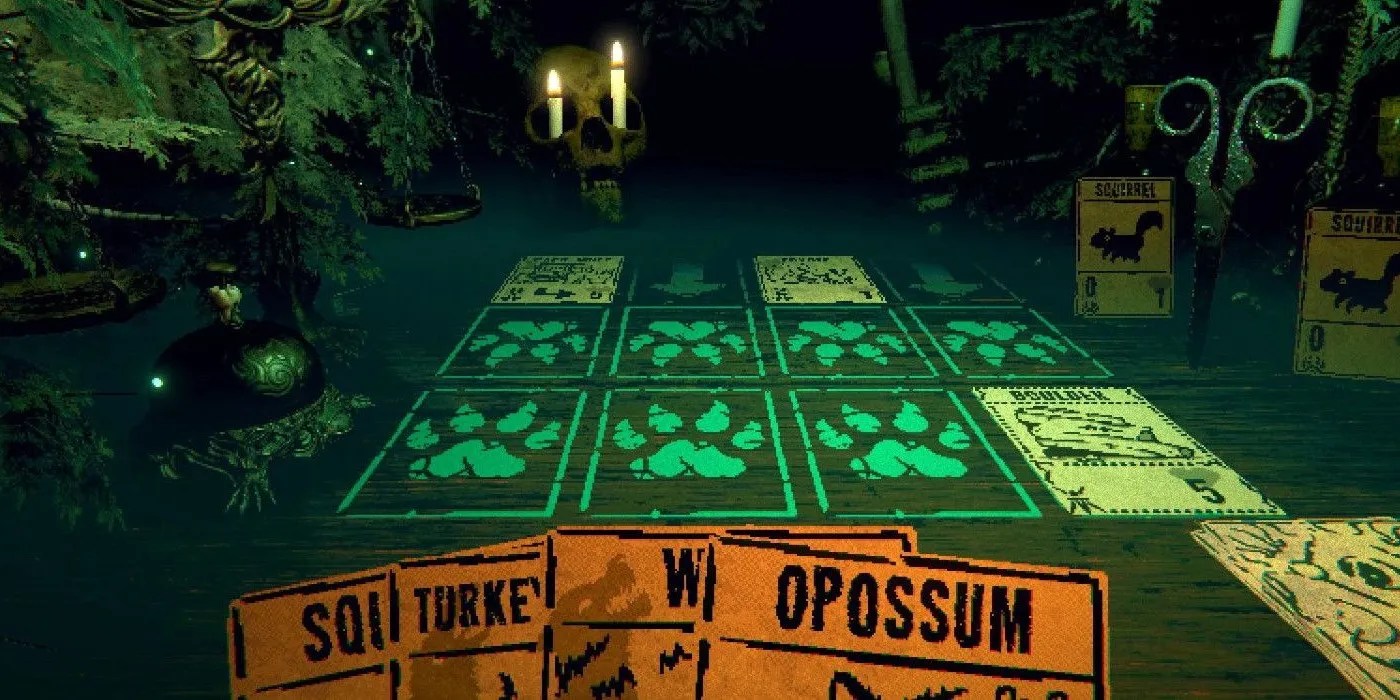
    Inscryption – I’ve tried getting into this game ever since its release. It is one of the more renowned card games, known particular for the mystery that encapsulates the in-universe card game. Unfortunately, I thought the card game itself was too simple. There were some archetypes and combos and strategies, but not enough, and without that satisfying loop, it could not maintain my attention. The story was definitely not compelling enough.

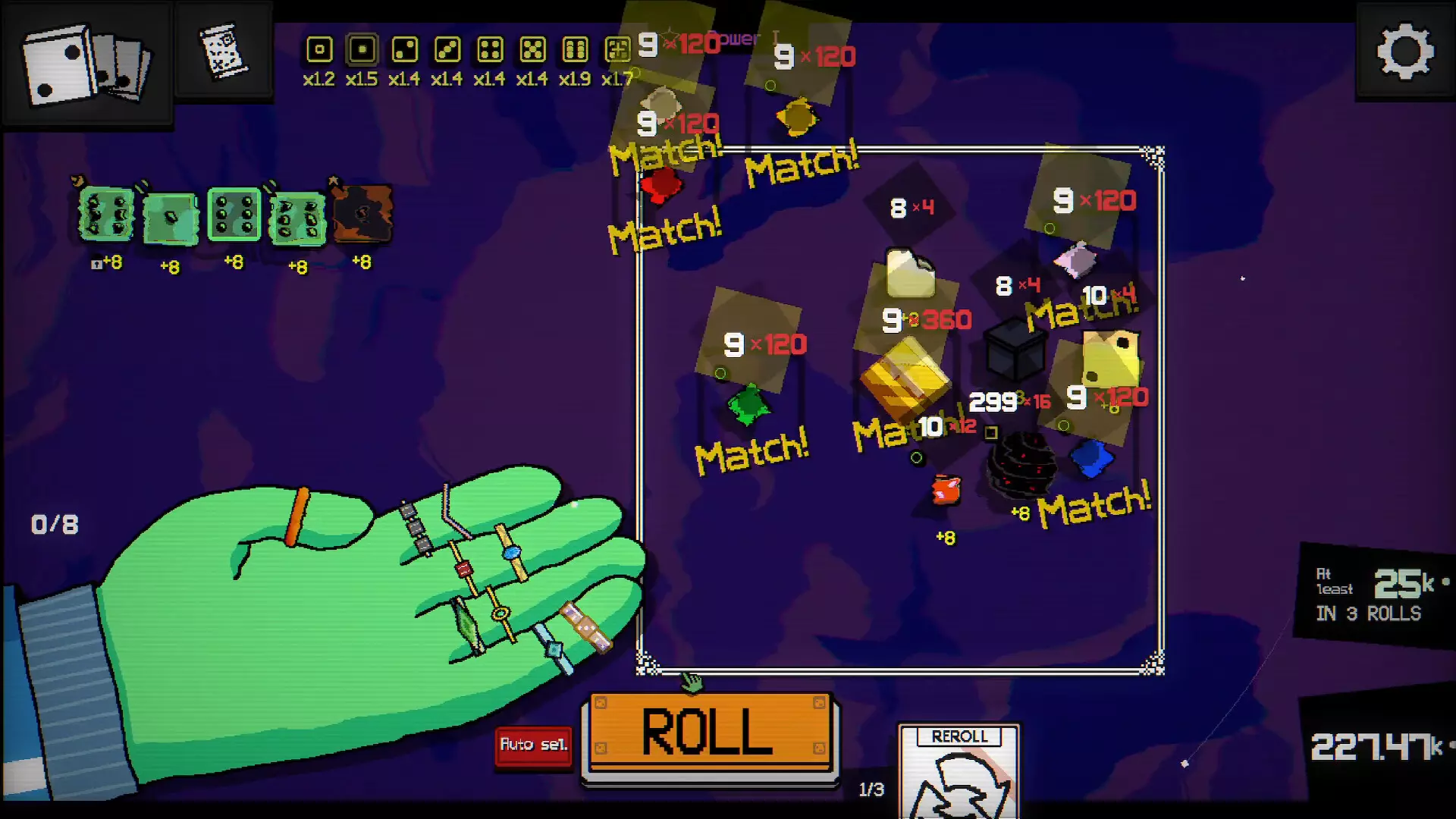
    Dice A Million – The market has been flooded with Balatro-likes. Dice games seem to be a natural fit for the genre, and I think Dice a Million does a great job at transposing Balatro/roguelite mechanics with dice. This game is enjoyable for short bursts and would be incredible as a mobile timewaster.

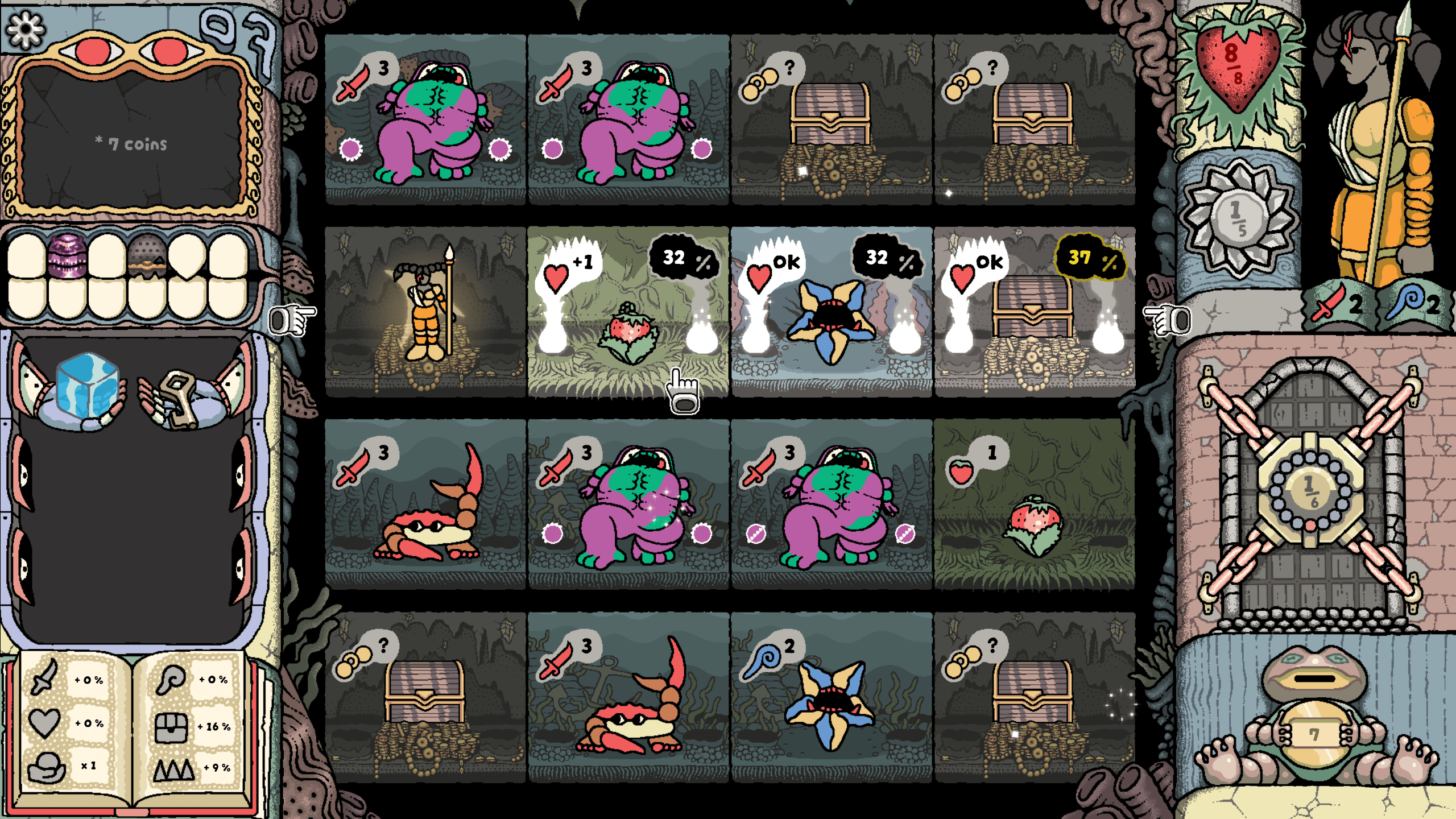
    Death Howl – I need to play this game more, but it’s insane that I can’t play this game on Windowed mode.

    Squeakross: Home Squeak Home – Picross puzzles are fun in themselves and are usually enjoyed for their own sake. Most games (unlike the one reviewed below) add only things involving accomplishing them. I think this is the best way. The elegance of the Picross puzzle, like Sudoku, best stands alone. In Squeakcross, solving these puzzles gives the players furniture with which to decorate their apartment. If you already like Picross games, this is a nice structure for playing a few once in a while, and is enjoyable for as long as you enjoy Picross puzzles. The question really is how many one can do before one becomes sick of it and needs to move on.

    Crushed In Time – The production in this game is incredible, and the opening in particular is very effective at introducing the meta aspects in an exciting, compelling way. The pulling mechanic, whereby you interact with everything, including the menus, through pulling them, is also very interesting. However, as an adventure game, it is quite simplistic. The levels are many times constricted to one or three screens, and you move on only when you have solved the problems within them. Occasionally, usually at the end of a chapter, there is a larger area to explore, but there is nothing ever so grand as, say, Day of the Tentacle or Grim Fandango. I thought that with the simple and elegant pull mechanic, larger levels would have helped offset the limited options. Still, a good game, particularly for younger gamers. I imagine parents, older siblings, etc., would enjoy playing this with younger people, and both would be well entertained.

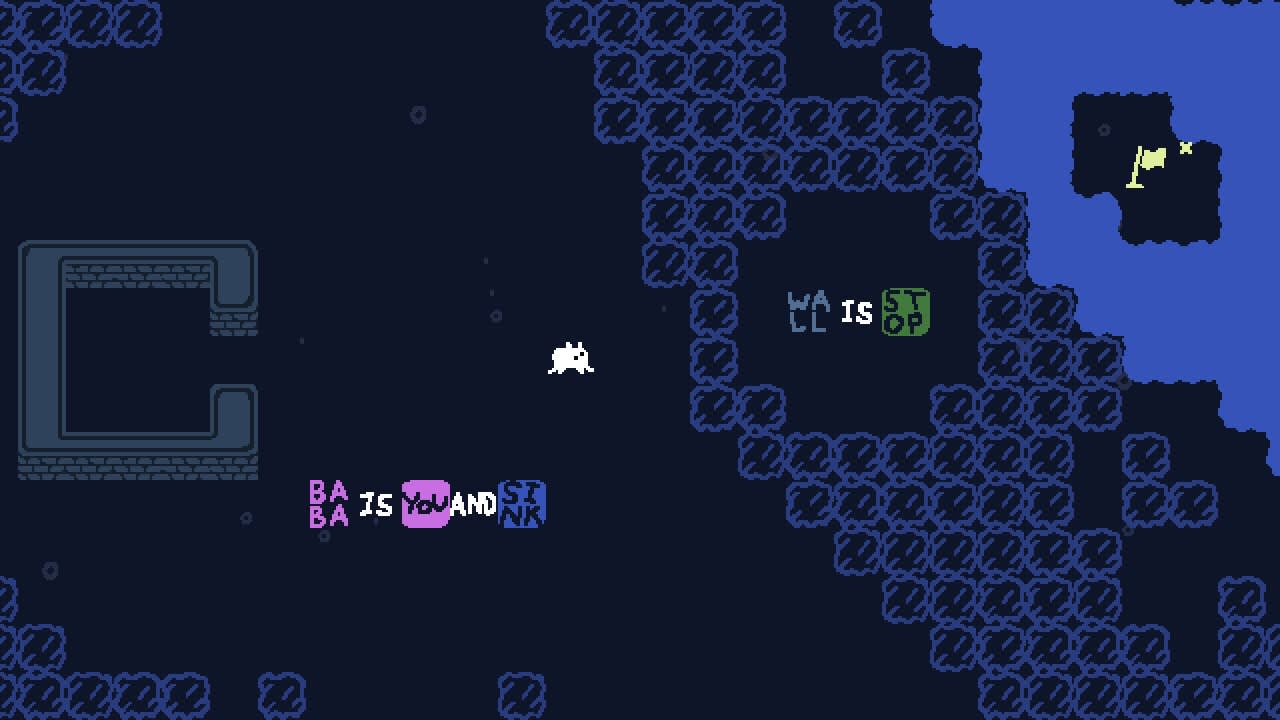
    Baba Is You – I’ve had this game for many years, and once in a while I pick it back up to finish a few stages. This time, I finished around half a dozen before putting it back down. The main mechanic of pushing words around to make up the rules of the game never get old, and the puzzles get increasingly difficult in unexpected and inventive ways.

    The King is Watching – This game is great, and what keeps me from sinking many more hours into it is personal preference. As a roguelite, the game is fun, varied, and interesting. Knowing which of your titles you should focus on so that they produce their resources (as tiles only produce when you – The King – are watching) is the main puzzle. From the resources you gather, you create units that defend your castle from monsters that periodically come. Units do not only need to be numerous but of the correct type: There are knights, mages, bombers, and so on. As interesting as this is, the main loop is a bit too passive for me, and the parts that do require my active participate do not interest me much.

    Sol Cesto – This game is about distilling the roguelike formula to its very essence: It is about managing chance, and you do so very directly. You click a horizontal line of four rooms, and the one you land on is random. If it is an enemy that has a higher power than you or a trap, you lose a health. Otherwise, you land on health, treasure, etc. You can gain powerups that increase your chances of landing on certain things. The art and the simple formula has its charms, but for many people I suspect it won’t be enough. I think this title is better as a mobile game you could pick up and play.

    CiniCross – I liked this game, although the more I played it the more I realized that it did not work. Picross puzzles just don’t work in this format; they are meant to be played slowly, in a relaxing way. And it seems as though there is a very good reason for that that this game misses, and it suffers from it. The execution and the idea are very good, but ultimately it only goes so far because of the mismatch in terms of its very essence.

  • Diorite statue of Gudea, prince of Lagash, dedicated to the god Ningishzida; 2120 BC (the Neo-Sumerian period)

    Dr. Tal—Anguish—David—Mesopotamia

    I was telling Dr. Tal that my life is has been so stagnant, has been so useless, and meaningless, and vain, even for myself. For many people, at least they could live for themselves, wanting at the very least to see another day. I don’t have that, either. Many times I lie in bed and look at the ceiling and hope that I would die instantly. Nothing painful, hopefully. But just vanish. And I don’t even want to go to paradise (not that I am invited). I want to vanish and diminish finally into total nothingness. The Buddhists had some sense of this; in many schools of Buddhism, and some schools of Hinduism, the goal is to achieve nonexistence—that is, escape the cycle of birth and death.

    I read also that in some schools of Buddhism, it was very much possible to become reincarnated as a god, but the gods themselves wish to be reincarnated into people, because gods do not have the motivation to practice (the practices necessary for enlightenment), living lives of almost complete pleasure and leisure, and so have little chance of achieving Nirvana. As with Christian cosmology, humans are at the cusp of the scala naturae, and this very enjambment between the divine and the worldly is what spurs them to yearn for something greater.

    I yearn for nothing greater. Or lesser or the same. I want for nothing, and I want nothing. This is why I cannot end myself, either. But I am totally in anguish. In my younger years, I suffered from anxiety, a kind of constant fear in the distance, pinning at me. But now I suffer from anguish, not fear but actual pain, constant and bearing down on me.

    After David, I played so many video games. I did barely anything else apart from play video games for months. I gave him so much, and he left so abruptly. I was so sure that he would never do anything like this; it had not even crossed my mind that he would be capable of it. I called him my beaver, in the stupid way that I do. He was Canadian, that was the most obvious reason. But he was also hardy, hard-working, never complained, noble. Cute. I suppose at the end of the day beavers are also rodents. Wild animals…

    We went to a traveling exhibition of Mesopotamian History at the SMX Convention Center. My clone, Elmer, and I were there. Emily and Danny were with us, but they were in the mall. Emily wanted to buy components for her computer.

    Elmer and I were staring at a statue of a king, now crumbled, although more or less intact. To think that this thing had been around for thousands of years. I imagine the moment of its creation, what it must have been like for that sculptor. Was it an ordinary day for them? What did they have to eat that day? Were they in love, did they have a family? What were their secrets? They couldn’t have imagined that, someday, beyond what they could possibly ever fathom, someone would be staring at their work at a place like this.

    I said, “Do you think you could make a time machine that brings us to ancient Mesopotamia?”

    Elmer thought about it for a moment. He was staring at the statue with me, his hands behind his back, his glasses dangling at the tip of his nose.

    “Sure,” he said. “Although the further back you travel, the more dangerous it is. As you might have guessed.”

    “How dangerous?”

    He turned to me. “When you ask questions like that, it scares me.”

    I shrugged. “Anything worth knowing is worth risking your life for, don’t you think?”

    “No,” he said. “Sometimes, maybe. But often no.”

    “Is it like fifty percent? Sixty?”

    He took some time to respond. “I’m going to have to make the exact calculations to even give you a ballpark figure,” he said. “But the chances of making it are just as likely as the machine being destroyed before we even get there.”

    “So fifty-fifty?”

    “No.”

    “That sounds like fifty-fifty.”

    We moved on, looking at the other specimens on display: Vases, tablets, other statues, chariots.

    Elmer said, “You’re not really thinking of doing it?”

    I shrugged. “If you’re willing, maybe we could.”

    “We?”

    “Who’s going to drive?”

    “I don’t know, but I’m not going to risk my life to go to some ancient shithole. I don’t know what you think Ur is like, but that place must be terrible.”

    “Because it’s ancient?”

    “Among other things…”

  • At the mall a new ice cream place opened up. “Nuclear Ice Cream.” I didn’t care for the name, but it said they had 50 flavors, all free to taste. Their store was big, and it was so full that people were outside, standing around, eating. My clone, Emily, and I went inside to try. We had to line up, and people were taking their time, trying the flavors, picking which they liked. We must have been standing there for fifteen minutes.

    On the wall there was a big graphic that showed all their flavors. You could mix them any way you’d like. And they had these gigantic cones you had to carry with two hands, along with the regular options. I decided I wanted the megacone. I was depressed, and ice cream was supposed to be a kind of balm for that. Especially for the kind of depression that wasn’t serious—that wasn’t the result of a death in the family, or actual hardship, or the loss of true love. It was more shallow, more stupid. Exactly the kind of depression ice cream was for.

    I chose bubble gum and cotton candy. They were both very sweet, and my doctor told me not to eat so many sweet things (or much at all). I was going to have to make an exception. We left and found a place nearby with some trees and sat by them on benches.

    We were at the Mall of Asia, which is the largest in the country and one of the largest in the world. It was a grand temple of consumerism. The country had very few parks, and all of them ill maintained, but the malls were where people gathered. It sickened me. But I can’t fix the world; I accepted that long ago. So, I sat there, with my giant ice cream cone, and did my best to heal.

    “You’re quiet,” Emily said. She got raspberry with cookie dough. An atrocious combination.

    My clone got Oreo cheesecake with queso. “He’s going through that empty void after you get over a break up,” he said. “Where you think you will never love again.”

    “What did I tell you about speaking for me?” I said.

    My clone shrugged.

    No matter the time of day or time of week, the Mall of Asia was always full. It was a Saturday, and so it was especially packed. A massive crowd moved between the benches spaced around the outside corridor, where people could move among the many buildings of the shopping complex. They had set up fans that sprayed mist, because the heat was intense this time of year, but it barely did anything. We had to eat quickly because the ice cream was melting.

    “Is it David?” Emily said.

    Emily and David had met a few times during movie viewings at my house. I saw at the time that Emily was inquisitive regarding our relationship. She had not seen David before he suddenly entered my life, and once in a while she caught us holding hands or David would say something nice about how I looked. In private, Emily would ask: “Is he gay?” Which I took great offense at because I don’t think such questions are relevant anymore. I’ve never asked David about his sexuality. Why would I need to ask? I could observe.

    I also thought that such questions were meant to limit me with regard to who I could love or who could love me. We were supposed to be way beyond that, as progressive people. Then again I’ve always suspected that Emily was not really a progressive person and only pretended to be because people around her were progressive. That if supposing she happened to be around Nazis, she would gladly take on those views as well. Arendt called this the banality of evil, and Emily was a banal person. Most of the time there was nothing wrong with that; that’s why I liked her. She was a respite of a person that way. But other times, like these, it caused problems.

    Because of this I hesitated to tell her that it was David. And that the suspicion behind the question was right all along: David had always been too manly, too straight to like someone like me, who had a beard and was overweight and was losing his hair. To my ears, she was really asking: He can’t really be into you, can he? And it seemed time had revealed that the answer was no.

    Emily didn’t revel in such things of course. During my breakups in the past she had always been there for me, and she made sure that I was alright. But knowing that she could derive some pleasure out of it, even the simple pleasure of being right, bothered me, and perhaps there was a time for her to learn the truth. But that time wasn’t now.

    I had only finished around half of my ice cream when it had begun to drip all over my fingers. I used the tissue that had been wrapped around the cone, but it was no help. I had to eat faster, and instead of lapping up the ice cream I began to take chunks off of it. The other two had not gotten the megacone and so were already finished. We were all sitting there, doing nothing, tired.

    For hours now we had gone around buying things for Emily’s new room. She had had her room renovated, and she was filling it up with all sorts of things. Growing up, she was obsessed with The Sims, and this was something like that, but in real life. When I discovered she was doing that, I thought that was a very adult thing to do. For one reason or another, our generation barely grew up, or never transitioned into doing things that adults used to do when we were children. The world had probably changed, as it always does.

    I am 35. Still, I hadn’t found love—only fleeting glimpses at it. For much of my life I had been difficult to love, and now that I am receptive to it, and able to understand its responsibilities and burdens, and willing to suffer in the way that all love entails suffering, I have to wait. Despite a growing, aching impatience. Sometimes, I think about turning 40. About what that should mean. When I was 20, I thought about turning 30, and I remember having ridiculous visions of myself lying on a couch in my own apartment, reading a book after work. Ridiculous visions.

    So, I don’t think about where I might be or what I might be doing at 40. It’s useless.

    I had to take massive bites out of my ice cream because it was melting all over my hands. I had made a mess out of it, and at the end my mouth was numb from the cold. My hands were all sticky. I had to go to the men’s room, which was crowded and smelled. There were lines for the toilets, the urinals, the sinks. After washing my hands I went back out and Emily and my clone were sitting there with nothing to do.

    I didn’t know what to do, either, but a post I saw on my feed reminded me of the Labubu dolls. People hated them, although I didn’t understand why. I understood if people didn’t think they were cute, didn’t think they were worth the money. But people hated them and loved to hate them, simply because other people liked them. And that’s why I liked them, too. People like to hate harmless things if these harmless things become popular enough because popular things are considered objects of the masses, and when something is for the masses it’s supposed to be bad. I despise that kind of cultural calculus.

    We went back inside, and I found a hobby store that sold all sorts of collector’s items, including Labubu. Apparently, you buy a box, and you can’t tell which you’re going to get. I thought that was cute—a kind of loot box. Emily was incensed that I was getting one, which only made me want it more.

    Then, we went home. My clone didn’t get one. In the car he annoyed me by saying that if I got one, then it was his, too. Although we had decided long ago that this isn’t how things are going to work. If we were different people, then we owned different things.

    When we arrived home, my clone and I sat in my room to open my labubu. It was going to be a kind of birth; every labubu is supposedly different because of the design and the name. Obviously, this can’t always be true; there are only so many combinations of these things. Still, sometimes people look like other people, have the same names as others—these things are bound to happen without negating the quiddity inherent in every soul. I believed my labubu, at that moment still in gestation, had a soul and was an individual.

    My clone was watching me read the box.

    “Open the fucking thing already,” he said.

    “Okay.”

  • The 2018 God of War, I think, has such a high production value that is on par with so few other games (The Rockstar games, mostly) that I would called it not only a AAA game but a AAAA game—maybe an S game? Something along those lines. That is to say, it is in a category with a very select few with a quality that is exceptional beyond exceptional. The writing, the gameplay, the visuals, the music, all aspects of it come together at such a high level that it cannot even be said to “set the bar.” That bar would be too high and consequently most of gaming would simply not do for the great majority of the time.

    In college, I wrote my thesis on Fallout 3. In my research, I decided that games could reach their potential if they embraced the ludological side of the medium: That they should minimize story and emphasize mechanics, choice, and emergence. The narrative should emerge organically from the actions of the player within the set world, which was authored primarily through the rules rather than the narrative. This was during the time of games such as Uncharted and The Last of Us. My problem was that these games had interesting, cinematic stories, but they were hardly games. That bothered me.

    When God of War was released, I was strongly prejudiced against it. I saw it within the continuity of the trend of “cinematic games” that were weak mechanically and tried to emulate movies. It echoed to me how movies used to emulate plays before cinematography through editing was developed and allowed the medium to mature. I played a bit of it and left it; I do not recall why. I think I played it around the time something else was released, and I dropped it for that.

    Mostly during this time I played many simulation games, in particular the Paradox grand strategy games. These games exemplify my ideal: There were infinite stories that emerge from these strategy games (especially Crusader Kings 2) even if there were no cinematics, set progression, or conventional narrative. Every game I played was set against this standard.

    Recently, I watched an Outside Xbox stream of the RE: Requiem game. It struck me how many mechanics were in that game, in the service of keeping things interesting. I’ve realized at this point that I haven’t played a so-called AAA game in a while, much less enjoyed one. The last AAA game that I truly enjoyed was Elden Ring, which I played exclusively for around 3 or 4 months, a few years back. I had just played Death Stranding 2, although I did not enjoy it much. I had merely amused me.

    I greatly enjoyed the RE: Requiem, even if I am not especially interested in the Resident Evil franchise or survival horror. I also had a few misgivings about the game. Still, I had a great time because the studios behind these games have enough resources to throw anything and everything at you in the name of entertainment—and I was indeed entertained. And also of course I really loved seeing Leon Kennedy.

    After this, I played RE4 remake, Pragmata (a modern classic), and then God of War, which I decided to revisit given my new perspective. I was very pleasantly proven wrong about all my prejudice: The adventure was enjoyable from beginning to end. Not only is the combat fun in itself, but a variety of builds is possible. The story was expertly written, not at all bogged down by B-grade writing that many other video games have, even the best ones. And the set pieces were gorgeous and thrilling.

    I’m going through God of War: Ragnarok right now. I am enjoying it, although their attempts to make it a more varied experience give mixed results. Despite that, the experience is a heightened one; its faults are not like the fault of ordinary video games. These games reside in the realm of art, not merely entertainment. And later I hope to discuss the themes of family that run through these games and one of the reasons it is so special.

  • Spoilers for the series follow

    I have thus far finished the main quests of the Batman Arkham series. The games are enjoyable, although they can be quite linear and the encounters are not challenging enough for me to actually have to use all the tricks in my arsenal. Despite that, everything comes together to create a whole that—all things considered—is an exciting adventure.

    That is, at this point, all I want in a video game. There are different types of games, of course, and there are games that focus more on the mechanics or a specific gimmick. There are games also that focus on the competition, such as online shooter games and MOBA games. But in terms of a singleplayer experience, I want to be enthralled from beginning to end via a combination of the gameplay, the story, the graphics, the set pieces. To feel that, after everything I’ve gone through, I could say: What an adventure!

    The crux of the games center on a theme: Batman’s madness. Up until the very end when a manifestation of the Joker prods at Batman’s psyche, we are reminded that Batman is no different from the insane people that he tosses in prison. He only happens to be a beneficial one. This is central also to Todd’s transformation: He realizes that Batman and the Joker are trapped in what Joker called “their little game.” Growing up in poverty has showed Todd the power of vicious cycles, and just as the richer only get richer and the poor only get poorer, he saw that the Joker continued to kill and the Batman continued to throw him in Arkham Asylum, to no end.

    My problem with the theme of the series is that this madness does not get its comeuppance. It is portrayed as noble and not problematized enough. To be sure, Batman as such (the persona) is destroyed because ultimately his failure to obtain lasting justice allows Scarecrow to unmask him. Had he killed Scarecrow among all the other villains he had defeated in the past, he would not be in the situation he found himself in. However, the point of the ending was not so much his failure to create lasting peace in Gotham but the strength of his will. I think this confuses themes that could have been better emphasized.

    The Joker is, ultimately, correct: Batman is no different from any of his enemies. The only difference is that his particular brand of madness involves putting away people who have harmed others. However, like all types of insanity, Batman perpetuates the conditions for his madness by allowing his enemies to live and strike again. Given the length of time Batman has been engaged in his “little game,” all the deaths and suffering his enemies have caused, despite the pauses when Batman captured them and before they escaped prison, amount to a net loss for Gotham.

    The Arkham Knight could have forced him to have a reckoning with this reality. But he doesn’t. Jason Todd had a very personal vendetta that did not align with his realizations that made him want to pursue the Joker alone. I also found the boss fight with the Arkham Knight to be very underwhelming. I would have much rather preferred to have a sparring match with him, during which he had an emotional confrontation with Batman. That didn’t happen. I would have preferred this even if Batman still wins him over (as he does now). At least there would be some kind of catharsis. Seeing Jason free Batman later was not enough. And the Batmobile fight was more annoying than exciting.

    Despite the flaws of the narrative, I greatly enjoyed the gameplay, and I was riveted by the story up until the end when the momentum seemingly fizzled out. Thankfully, this was at the very end, up until the Arkham Knight resolution and everything after it. I loved traversing Gotham, which was beautiful and varied and large. I loved going through the different side missions, which were always interesting in their own ways. There is something in the game for everyone, no matter how they wish to play, including those who enjoy using the Batmobile (which, from the looks of it, are very few).

    I was surprised to learn that this game came out 10 years ago. The graphics are still very beautiful, and the style makes it timeless. Moreover, the city is big but not so big that there are immense open spaces where nothing happens and exists only to be traversed. Every few meters there is something to be done. After playing and moving on (I am now playing God of War, the new series) I found myself missing Gotham, wanting to visit, wanting to do more things in it. Even wanting to simply see it.

    I think that although video games have been around for a few decades now, the medium remains in its infancy. Although we call them “video games,” they are not strictly games anymore. They are more like “interactive media” that encompass within them a great variety of works, integrated into a whole. All of these things must work together at the highest possible level to create a masterwork, which Rocksteady has done here. I’m happy to have revisited this series.

  • I was listening to the Black Eyed Peas’ “Meet Me Halfway,” which was much better than I remember. I listen to them pretty regularly, but this somehow slipped my mind. I’m glad I rediscovered it.

    There was a comment there: “It’s what Jesus does.” Meaning, Jesus meets us halfway. He does some things; we do the others. I appreciate the sentiment, but I was struck by how much people misunderstands the Gospel. Jesus does not meet us halfway. Jesus did everything. He did everything and then some—the fact that what he accomplished exceeded what any ordinary human could accomplish reflects the fact that man’s debt to God also exceeded what any person could pay. This is the glory of his passion. We cannot meet Jesus halfway because, as in Zeno’s paradox, even half of half of half of half, and so on, of that debt is an insurmountable infinitude. To atone for our sins, we would have needed to sacrifice not only ourselves, or even all of us, or even all the world ten times over. We would have needed to sacrifice a God—and he did that for us, though we deserved nothing.

    Meeting Jesus halfway seems at first blush to be a concession of humility: That we should not expect Jesus/God to do everything for us. That we should work towards salvation, too. I suppose in this regard I am a Lutheran. Or something of a Lutheran, in terms of the bondage of the will… Attempts by humans to effectuate the divine in any way are doomed to fail. In the Scala Natura, man is represented as a half beast, half divine. We flatter ourselves because we experience the divine, and we have interacted with the divine, and so we think that part of us must be. But I think that the world already has a divine aspect, and as being in the world, then we will inevitably meet it. That does not mean we ourselves are divine; anything here on Earth could. Swine encountered divinity when Jesus expelled demons from within them.

    For a bit there, I considered myself a Calvinist, believing that because of the ineffectual nature of human striving, those saved must be saved via the arbitrary/unfathomable will of God. My problem with Calvin is that he takes this to mean those damned were chosen by God to be damned as well—which is absolutely unacceptable. It is totally nonsensical for God to extend any of his Creation toward evil, whether it is by withdrawing his grace or any other mechanism. It makes more sense to me that his act of incarnating as man, through Jesus, represents salvation for all.

  • Death Stranding 2: On the Beach

    Have been on absolute rampage playing AAA games these past few months. Started with Death Stranding 2, which I enjoyed, in the broadest sense, but did not like the same way that I liked Metal Gear Solid 5. In fact, this lingered in my mind so much that I played MGS 5 after I finished DS2. Despite the fact that MGS 5 is kind of like the Sistine Chapel roof after a partial cave in, given its truncated nature, I still felt like DS2 was a lesser video game, despite that. The gameplay loop, although amusing, is simply not challenging enough. But, more than that, the thematic package is simply not as powerful: In the MGS series, one of the core themes is how warfare has produced technology and states of humanity so arcane that they become almost indistinguishable from magic1, which is why the plot of the games are so confusing, recursive, contradictory, nonsensical—to “ordinary people” world politics and the deeper workings of the world are these things. That is the point.

    In DS2, although the afterlife can also be confusing, these are not the themes that exemplify the Great Conversation regarding them. The mixture of technology and working to bring people together, as well as meditations on the soul and what comes after and its suspended state, do not gel together to create a coherent whole. It felt, truly, like Kojima was putting together things that he found interesting or compelling without a core thesis. Thus, it was amusing but never profound the way MGS consistently was.

    That being said, I thought the ending was an absolute delight. It was meant to be a gigantic (in one case, literally) set piece that even had song and dance. I loved that. One thing that I could say was a total and abhorrent failure was Neil Vana. The Neil Vana storyline and character (and name) was boring and really epitomized the half-baked nature of the entire enterprise. It was visually compelling and maybe mysterious in the beginning, but later on we were repeatedly forced to care about him when he was simply not interesting, despite his integral connection to the story. It was apparent Kojima was trying to touch a nerve and pull heartstrings, but my nerves were not touched nor my heartstrings pulled. I was bored and, in the final cut scenes with him, annoyed.

    Resident Evil: Requiem

    After replaying MGS 5, which took no time at all since I did not play the second half which was overwhelmingly (although not completely) challenge versions of the previous missions, I saw a livestream of Resident Evil: Requiem. I had never taken much interest in Resident Evil. I did not particularly like survival horror games. I was afraid of playing them when I was a child. And not even as an adult I thought I would find them repetitive and too reliant on cliche.

    I did enjoy the game, however. I have a very low opinion of the earlier Grace section because the sneaking was not very interesting and, I thought, a bit antiquated. Maybe that’s what they were going for, but I didn’t like it, especially since I love stealth games (Splinter Cell, Dishonored, Metal Gear, even Hitman in a way). And one of my biggest gripes was how nonsensical it was that you could not put Emily down anywhere except on a couch. She could not be put on the floor? And why did I have to lead her to the room with the Braille? Why couldn’t I have written that down somewhere, punctured holes on a piece of paper, and then let Emily feel it in her enclosure? Grace put her in more danger doing what she did.

    I know that suspension of disbelief should be a thing, especially in a game like this, but ther are limits to a person’s credulity, no matter how much they will it. A game should be designed with that in mind, and most of them are. In any case, the parts with Leon are much, much better. Sadly, I did not play any other RE games and so did not experience much nostalgia revisiting Raccoon City. I streamed the game, however, and my friend who was there with me was very nostalgic seeing the old station.

    Overall, the gunplay was fun, and I enjoyed the adventure. And that’s what I want from a video game. There used to be a time, in my 20s, when I liked games to always exemplify their ludological side: I wanted mechanics and choice above all. But upon playing RE:R, I realized that for a long time I missed something AAA games do best, which is to give us blockbuster set pieces. The motorcycle sections, and the several parts of the game where the mechanics change a bit just because it was awesome, was great fun. I came out at the end thinking: What a great adventure! And more and more I am realizing that although there is always a space to look at games from a ludological point of view, many times it should be enough that a game gives you an adventure and a whopping good time, which RE:R did for me.

    Resident Evil 4 Remake

    With that new mindset (and wanting to see more of Leon) I got the RE4 remake. I remember playing the original when I was in high school and not getting it. I didn’t enjoy it. I don’t know why; I have a feeling something was released at the same time that I preferred to play. Given that it was the PS2, it was probably a platformer, which I used to play almost exclusively.

    This time, I thoroughly enjoyed it. The combat was exceptional, and the puzzle and exploration aspects were interesting enough. The story was corny, but it worked in that it was a kind of B-movie. Although I was very disappointed that there were no interesting characters. And yes I am counting Luis. Although granted it is very difficult to fit character work in such a game. I suppose they were serviceable.

    I particularly enjoyed the minecart sections. That’s what I mean when I said set piece: It was fun, and it added variety, so they added it in. The indie games that I had gotten used to playing are usually focused on a single mechanic or gimmick. The thing about AAA games is that they have the budget to keep piling things on to keep the entertainment going. I used to be very cynical about that, but now I appreciate it for what it is.

    Pragmata

    I heard about Pragmata only because of the frankly disgusting and disturbing controversies regarding how some people were acting towards the young girl protagonist, Diana. I looked into the game and had some interest, although had no plans to buy it early. I thought it was just another action game set in space. But when the glowing reviews came in, and because I needed something to play, I decided to give it a try. I’m happy I did.

    This game knew what its main feature was: The hacking paired with combat. Thus, everything else was more or less streamlined to make that mechanic shine. And it did. I thoroughly enjoyed it, and it made me think about how it has been a while since I’ve played a game where a mechanic was made the center of a game in this way.

    I was quite disappointed in its relatively short length. However, the game was meant to be replayed, and given how good the combat/hacking is, then it is always a joy to take on the more difficult challenges, even if they are basically the same enemies, only powered up. The “Unknown Signal” New Game+ (which unlocks a secret ending once finished) allows for some variety while going through the game a second time.

    The game’s production values with its signature mechanic I think makes this game an instant classic and perhaps the start of a series. The story, the visuals, the mechanics, and the set pieces all really come together into a beautiful work of art.

    Batman: Arkham Asylum

    Now, I am going through the Arkham series. I came across a list of jumpscares on YouTube. I saw the one with Man-Bat, and that made me nostalgic for these games. Apparently this game was released in 2009. I was only a year into college. I played this on my Xbox 360. In fact, one of the first games I played on it. I remember thinking the graphics and the cinematic presentation was incredible. Although playing it now I see that I’ve forgotten most of the story. All of it holds up until now. I play to play all the Arkham games; I still don’t know if I should include Origins because I don’t know why it isn’t counted in the series.

    Hope to update you on my gaming as I go on.


    1. I believe this is how we should interpret one of the most compelling moments in Metal Gear Solid 2: Sons of Liberty (spoilers incoming), where Fortune, despite having her machine removed, was still able to deflect missiles: We cannot anymore tell whether she truly is magical or if there is some other technological reason. Misfortune symbolized not only the blurring but the effacing of the distinction between magic and technology, a la Clarke’s Third Law. ↩︎