A few reviews of games I’ve played recently, as of July 13, 2026.

The Talos Principle – A very good puzzle game with nice progression, an interesting mystery of a story, and a philosophical core. Most of the puzzle games I’ve played take place in a 2D setting, or a very constricted 3D one, with the exception being Portal.

BALL x PIT – The ballbreaker formula seems to work well with roguelite elements. Collecting different types of balls, combining them, and giving your characters permanent buffs is a satisfying loop. However, there are few choices to be made apart from selecting what kind of ball to get. Theoretically, there are choices to be made in terms of what buildings to make, so that you get the maximum amount of resources outside of the dungeons, but these are mostly an afterthought and secondary to the action, which can become repetitive, no matter how varied the balls are. The base building elements outside of the dungeons make me feel like it might be too involved for a quick game played on the phone. However, the dungeon elements are great for passing the time when you do not want to do much thinking.

Vault of the Void – This game is incredibly complex and a refreshing change from the Slay the Spire 2 formula. You have a set number of cards in your deck, which you could reform at any time outside of battle. You block after the enemy attacks, so that you fulfill your block afterwards. You discard cards for energy, saving up to 3 for the next turn. So much of it is good and inventive. However, the low production value distracts from the merits of the game. It reminded me of a rough Alpha or a student project. I could bear with graphics that are not necessarily top of the line; however, I still expect games to have proper graphical and interface design. All of the mechanics in this game work, and they are very in-depth, with many synergies, strategies, combos, and possibilities, but with its UI and general graphical design and interface, I could not play for more than a few hours.

CloverPit – A minor issue I have with this game, and it may be a personal one, is that the interface is not completely menu-based. You have to navigate the small room where your character plays a slot machine with roguelite elements. It was fun enough, but I thought having to move physically from once place to another, although the room was very small, was tedious and unnecessary. I suppose this game is supposed to be simple enough that it is enjoyable in how mindless it is. I can see myself going through this game again, but at the time I did not find it compelling enough to stay.

Slay the Spire 2 – At this point I’ve played a little less than 500 hours on Slay the Spire 2. The depth of the strategy in this game is unmatched by any other game available today. For anyone who enjoys card building games, this is a must-play. It is a modern masterpiece, a classic of card games and roguelites.

Cubic Cosmos – This game surprised me because few people are playing it. The card game is quite deep, and there are many possible archetypes and combos. It is a good combination of complex deck building and simple (but not simplistic) PvE gameplay.

Vampire Crawlers – This game is a nice card-game rendition of Vampire Survivors. However, I wasn’t a fan of literally having to crawl around the stage, as in old-school dungeon crawlers. I also found the fast-paced gameplay less appealing than the cerebral gameplay involved in Slay the Spire 2, for example. Still, it is a fun casual game.

Balatro – A modern classic that perfectly blends Poker mechanics with roguelite mechanics. A true ludological meditation on chance, which is what both card games and roguelites are. It is as innovative as it is simple and elegant.

Dave the Diver – I can see why this game has so many fans. The game is stylish, and adventuring in the seas to find more, better, and rarer ingredients for your sushi bar is an addictive loop. What really kept me from it is the fact that I am more partial to card game roguelites. However, I could see myself getting into this at another time. The only thing that bothered me is the lack of respect for the fish that is turned into sushi. Often, they were treated as jokes who perish in fear. Yet in reality, in sushi culture, the ingredients are treated with the utmost respect, as the bounty of nature who is generous enough to share itself with us.

Monster Train 2 – I thoroughly enjoyed Monster Train 1. And there is much depth to the game, especially given all the factions and the way that two are always combined during a run. However, for some reason, I felt that this installment was too similar to the first, despite the additions. So, I had a hard time playing more than a few hours.
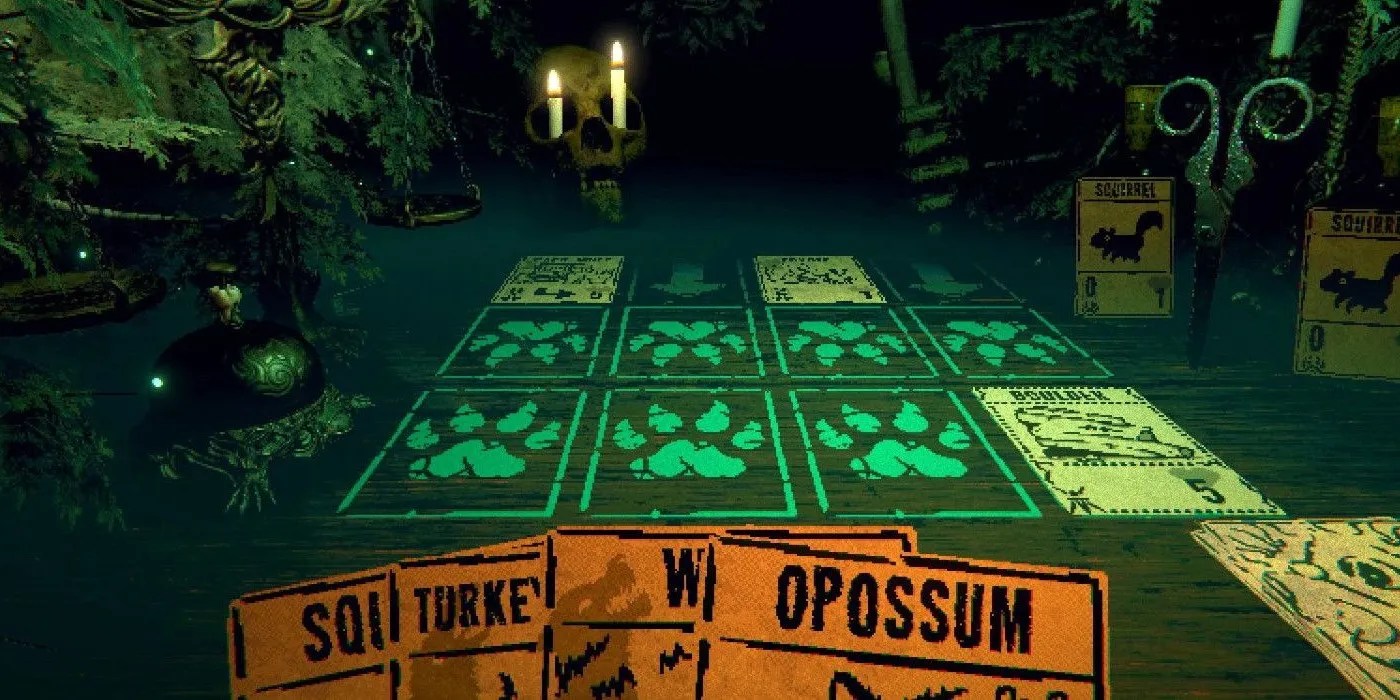
Inscryption – I’ve tried getting into this game ever since its release. It is one of the more renowned card games, known particular for the mystery that encapsulates the in-universe card game. Unfortunately, I thought the card game itself was too simple. There were some archetypes and combos and strategies, but not enough, and without that satisfying loop, it could not maintain my attention. The story was definitely not compelling enough.
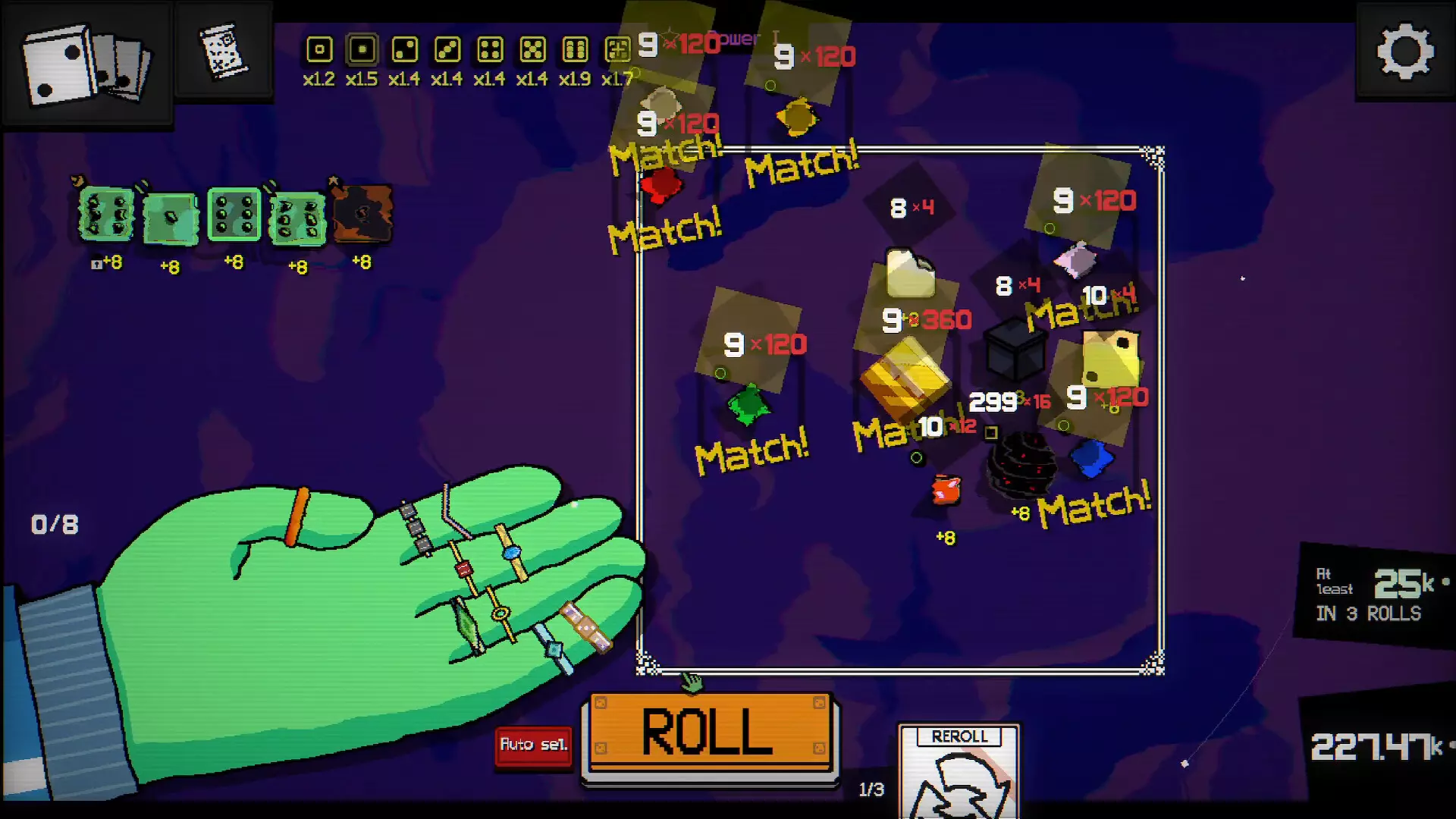
Dice A Million – The market has been flooded with Balatro-likes. Dice games seem to be a natural fit for the genre, and I think Dice a Million does a great job at transposing Balatro/roguelite mechanics with dice. This game is enjoyable for short bursts and would be incredible as a mobile timewaster.

Death Howl – I need to play this game more, but it’s insane that I can’t play this game on Windowed mode.

Squeakross: Home Squeak Home – Picross puzzles are fun in themselves and are usually enjoyed for their own sake. Most games (unlike the one reviewed below) add only things involving accomplishing them. I think this is the best way. The elegance of the Picross puzzle, like Sudoku, best stands alone. In Squeakcross, solving these puzzles gives the players furniture with which to decorate their apartment. If you already like Picross games, this is a nice structure for playing a few once in a while, and is enjoyable for as long as you enjoy Picross puzzles. The question really is how many one can do before one becomes sick of it and needs to move on.

Crushed In Time – The production in this game is incredible, and the opening in particular is very effective at introducing the meta aspects in an exciting, compelling way. The pulling mechanic, whereby you interact with everything, including the menus, through pulling them, is also very interesting. However, as an adventure game, it is quite simplistic. The levels are many times constricted to one or three screens, and you move on only when you have solved the problems within them. Occasionally, usually at the end of a chapter, there is a larger area to explore, but there is nothing ever so grand as, say, Day of the Tentacle or Grim Fandango. I thought that with the simple and elegant pull mechanic, larger levels would have helped offset the limited options. Still, a good game, particularly for younger gamers. I imagine parents, older siblings, etc., would enjoy playing this with younger people, and both would be well entertained.
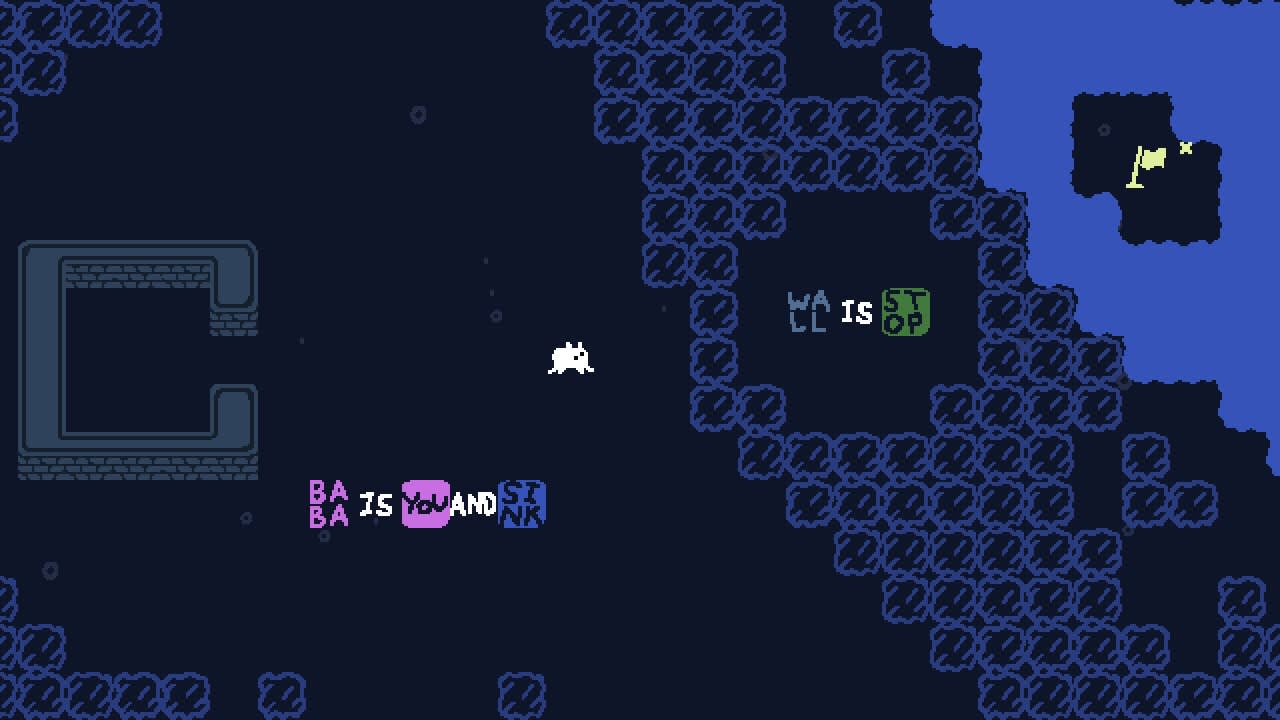
Baba Is You – I’ve had this game for many years, and once in a while I pick it back up to finish a few stages. This time, I finished around half a dozen before putting it back down. The main mechanic of pushing words around to make up the rules of the game never get old, and the puzzles get increasingly difficult in unexpected and inventive ways.

The King is Watching – This game is great, and what keeps me from sinking many more hours into it is personal preference. As a roguelite, the game is fun, varied, and interesting. Knowing which of your titles you should focus on so that they produce their resources (as tiles only produce when you – The King – are watching) is the main puzzle. From the resources you gather, you create units that defend your castle from monsters that periodically come. Units do not only need to be numerous but of the correct type: There are knights, mages, bombers, and so on. As interesting as this is, the main loop is a bit too passive for me, and the parts that do require my active participate do not interest me much.
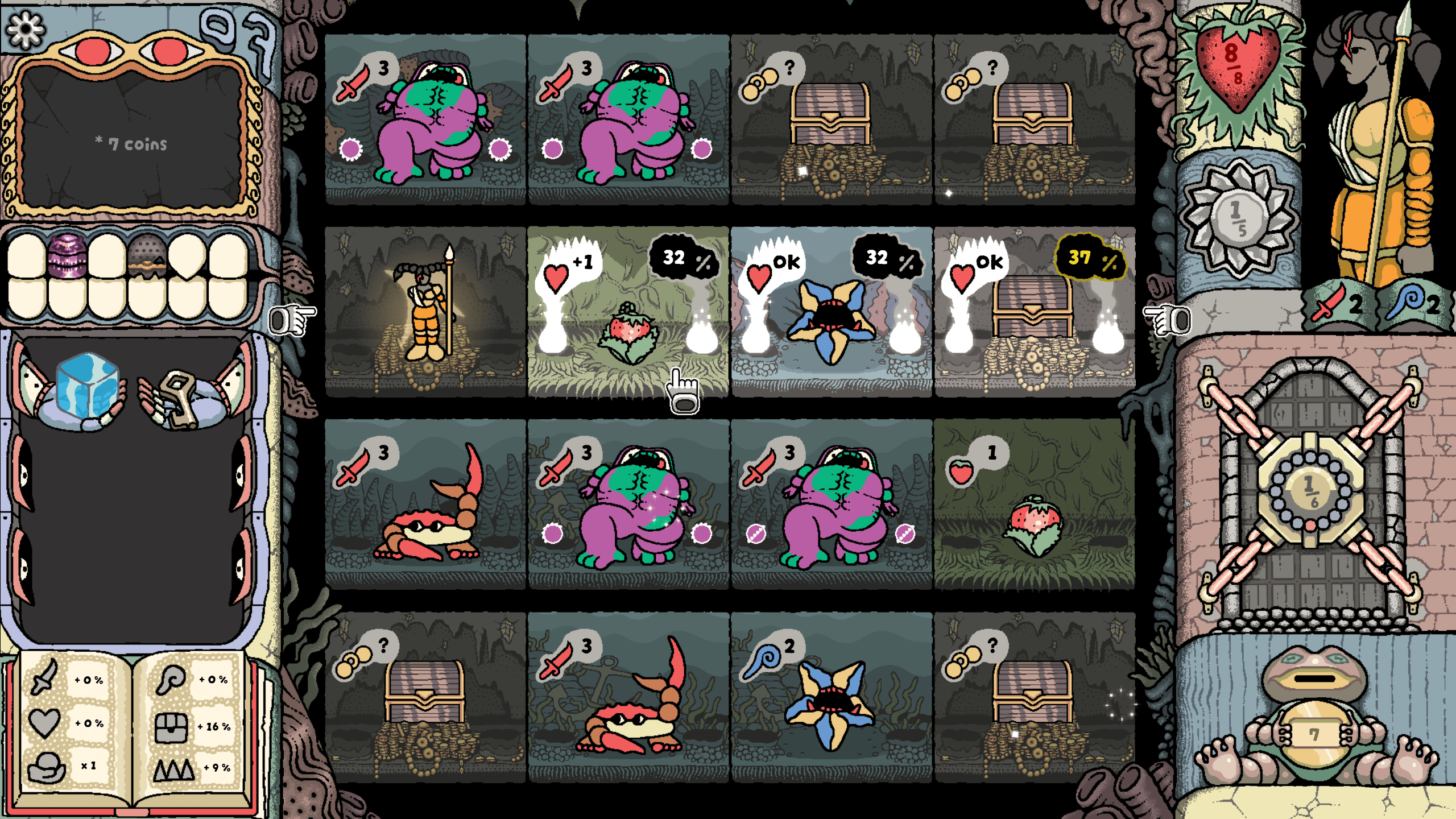
Sol Cesto – This game is about distilling the roguelike formula to its very essence: It is about managing chance, and you do so very directly. You click a horizontal line of four rooms, and the one you land on is random. If it is an enemy that has a higher power than you or a trap, you lose a health. Otherwise, you land on health, treasure, etc. You can gain powerups that increase your chances of landing on certain things. The art and the simple formula has its charms, but for many people I suspect it won’t be enough. I think this title is better as a mobile game you could pick up and play.

CiniCross – I liked this game, although the more I played it the more I realized that it did not work. Picross puzzles just don’t work in this format; they are meant to be played slowly, in a relaxing way. And it seems as though there is a very good reason for that that this game misses, and it suffers from it. The execution and the idea are very good, but ultimately it only goes so far because of the mismatch in terms of its very essence.